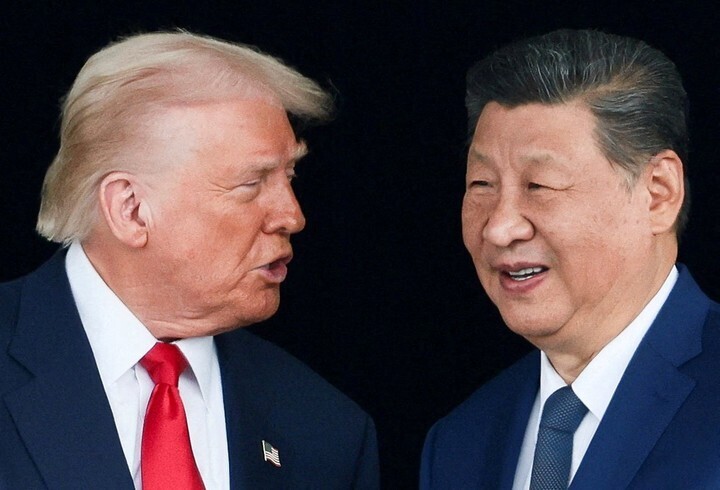
Donald Trump and Xi Jinping agreed to reduce trade tensions between the United States and China during a bilateral meeting in South Korea, their first face-to-face meeting in six years.
The meeting, held in an honor hall at Gimje Airport, lasted about an hour and forty minutes. It began with statements of "good harmony" and a commitment to work on results that would be "beneficial" for both countries and for global stability.
The leaders agreed on a gradual de-escalation of tariff tensions, a review of overcharges in sensitive sectors, and the restoration of technical channels to resolve disputes. They also committed to re-impulse mechanisms for periodic consultations between economic ministries and trade offices with defined work schedules.
It was noted that the commercial relationship cannot be isolated from the security agenda, although the technical working tables will be shielded from the volatility of the strategic situation.
Technology and supply chains will remain at the center of the bilateral relationship. The immediate focus will be on defining a roadmap with short-term milestones, verification mechanisms, and "stop" clauses to avoid new spirals of retaliation.
The meeting also addressed the nuclear dimension following Trump's announcement to restart nuclear weapons tests. In Beijing, the official narrative emphasizes "mutually beneficial cooperation" and the need to avoid accidental escalations that could harm growth and employment.
Disagreements persist over intellectual property, industrial subsidies, reciprocal market access, and controls on the export of cutting-edge technology. However, the choice of format and location sent a signal of pragmatism and damage control after months of tariff and technological friction.
In Washington, the move is interpreted as an attempt to stabilize domestic prices and provide certainty for investment. The idea of "de-risking" supply chains and creating early warnings for potential bottlenecks has gained traction again among technical teams.