The U.S. air traffic system has entered a critical phase, dealing with a historic shortage of air traffic controllers that has been dramatically exacerbated by the current and prolonged government shutdown.
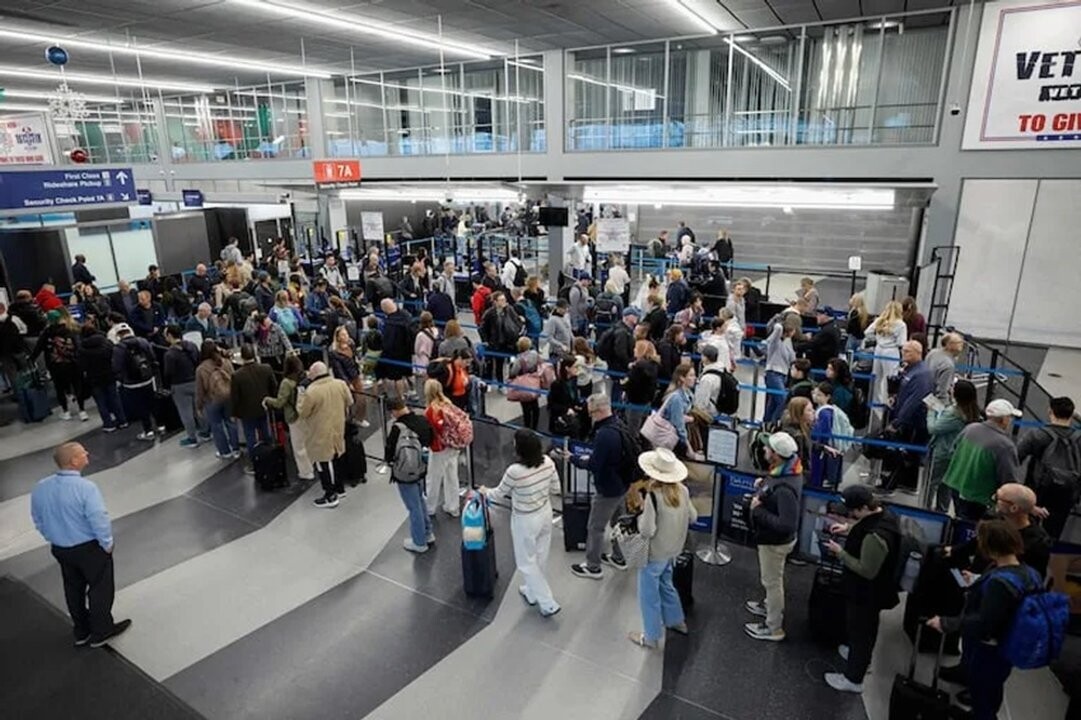
The combination of unpaid staff, worker fatigue, and a forced reduction in operational capacity has triggered massive chaos at the country's major airports, with thousands of flights canceled and delays exceeding several hours.
Crisis at Terminals:
The situation has become particularly critical at major hubs on the East Coast and in the Midwest, with average delays of over two hours during peak traffic times.
The airports most affected by the situation are:
Newark Liberty International (EWR), New Jersey: Labeled the epicenter of delays, it has temporarily suspended operations on weekends. John F. Kennedy International (JFK) and LaGuardia (LGA), New York: Have suffered delays of more than two hours. O'Hare International (ORD), Chicago, and Ronald Reagan National (DCA), Washington D.C.: Report delays of over an hour, with O'Hare registering more than 200 delayed flights on recent days.
Other affected airports include Boston, Philadelphia, Atlanta, Dallas, Los Angeles, San Francisco, and Miami.
The air traffic cuts, as confirmed by authorities, aim to "reduce the pressure" on the overburdened control system, whose collapse is seen as imminent if the budget conflict in Congress that has paralyzed the government is not resolved soon.
On the same day, FlightAware counted over 4,300 delays and a total of 15,573 delayed flights in a broader perspective.
Forced Reduction in Traffic:
Due to staffing shortages and security measures, the Donald Trump administration announced a 10% reduction in scheduled flights at 40 of the country's most important airports, implemented starting on Friday.
The chronic shortage: an alarming figure
The Federal Aviation Administration (FAA) was already facing a structural staffing shortage before the administrative crisis. This situation has driven up absenteeism and resignations in the sector, further increasing operational pressure.
Quote:
U.S. Transportation Secretary Sean Duffy has publicly warned about the severity of the situation, stating that the problems "are only going to get worse" and that the government has been forced to take drastic measures to prevent an accident.
The impact in numbers and airports
The consequences of this dual crisis are reflected in a heavy blow to air connectivity and travelers:
Massive Cancellations:
On Friday, November 7, 2025, alone, the flight tracking portal FlightAware reported over 1,700 flight cancellations across the United States.
Pre-shutdown estimates indicated that the system needed about 3,000 additional controllers to operate at full capacity and reduce pressure on existing employees.
This chronic shortage forces controllers on duty to work exhausting shifts.
According to the FAA, nearly half of the most important control towers have issued "staff alerts" due to the low availability of controllers.
The devastating effect of the shutdown
The current government closure, which has already broken records for duration, has paralyzed the payment of salaries to about 13,000 air traffic controllers (along with other employees considered essential, such as airport security personnel, TSA), who are required to continue their duties without pay.
Some airlines, like Delta, had planned for around 170 daily cancellations out of its 5,000 departures, while American Airlines announced a 4% reduction in its operations.
In previous days, the number of daily cancellations had exceeded 500.
Overwhelmed Delays:
Delays are counted in the thousands.
Six-day workweeks and shifts of up to ten hours have been reported, which increases stress and fatigue levels, and consequently, concerns about aviation safety.
The chaos not only causes economic damage and frustration for travelers but also puts the operational safety of the world's busiest airspace in the spotlight.