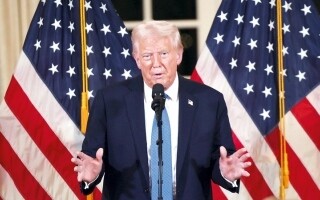
Countries of the Global South are increasingly viewing U.S. President Donald Trump's 'America First' economic foreign policy as a coercive force and a catalyst for increasing economic independence.
For over half a century, economic development in Latin America, Africa, and parts of Asia has been constrained by the austerity conditions imposed by the International Monetary Fund (IMF) and the World Bank, as well as by the punitive debt collection policies of commercial banks, U.S.-law-supported hedge funds, and trade agreements that hinder their ability to develop economically. In this context, the tariffs imposed by Trump are merely an intensification of the participation conditions that cause great harm to developing countries.
The prospect of greater cooperation among countries of the Global South is one of the few bright spots in an otherwise bleak global picture. Trade between Global South countries has expanded rapidly, providing significant leverage and opportunities. Today, 3.3 billion people in the Global South spend more on servicing external debt than on education or health, while the IMF has come to the 'rescue' with the same austerity prescription.
A Different Recipe On the trade front, the United States raised tariff rates and encouraged bilateral deals that favor American investors. At the same time, official development funding from public institutions, such as members of the OECD's Development Assistance Committee, was cut. The funding provided by development banks is limited compared to development needs. This has been added to debt crises. For all these reasons, developing countries need a completely different recipe. The hope is that increased cooperation among Global South countries will achieve this.
Global Rules The world experienced a brief period when the rules of the international system were more rational and respected the need for countries to have autonomy in determining their own policies. After the Great Depression, the United States and its allies sought to build a system that balanced trade expansion with national economic and social policies. At the 1944 Bretton Woods conference, inspired by British economist John Maynard Keynes and U.S. President Franklin Roosevelt, world leaders sought to establish global rules that would create space for new national deals insulated from the demands of private capital. The system included controls on capital, fixed exchange rates to prevent currency speculation, and a great deal of public financing. This allowed for an exceptional 'boom' and 'rebuilding' after the war and three decades of broad prosperity.
In 1944, most of the Global South was still under colonial rule. As these nations gained independence, their economies indirectly benefited from their ability to expand exports into a growing global economy. Latin America enjoyed a degree of political autonomy and three decades of significant growth.
As the U.S. fell into recession and inflation, the 1971 'Nixon shock' ended the dollar's convertibility, leading to the collapse of the Bretton Woods system. Starting in 1980, the new liberal turn under U.S. President Ronald Reagan and British Prime Minister Margaret Thatcher focused on market liberalization, opening up to capital flows, financial discipline, and reducing the role of the state, especially in the economic sphere. For the Global South, this shift often meant debt crises, austerity demands, and 'structural adjustment' policies that prioritized external capital and trade liberalization at the expense of local development.
In the late 1990s, speculative money flows caused major financial crises, even in East Asian countries with sound economies.
Economic Independence Since the 2008 financial crisis that hit the U.S. and some European countries, Global South countries have increasingly questioned the legitimacy of the U.S.-led international economic system and have taken steps to increase their economic independence. Since then, the Global South has engaged in what economist Elin Grabbe called 'productive dissonance'.
As the old model weakened, no single dominant model remained, opening the door for experimentation with new regional institutions, mixed policies, and divergent institutional logics. In this contested arena, Global South countries are trying to forge alternatives, from regional development banks and new monetary institutions to South-South trade and financial arrangements. Responses to Donald Trump's policies have reinvigorated these efforts, but they require more ambition and coordination.
A Massive Debt Crisis The international monetary and financial system has always been structurally biased against the Global South. For example, in the 1970s, the oil price hikes imposed by OPEC were very costly for Latin America. The core problem was the 'recycling' strategy of the organization's surplus countries. These countries deposited their profits in U.S. and other international banks, which in turn lent money to Latin American countries.
This scheme bought some time until the mid-to-late 1970s inflation crisis forced Federal Reserve Chairman Paul Volcker to raise interest rates to 20%. Interest payments on dollar-denominated debts in Latin America skyrocketed, while their own currencies plummeted, leading to a massive debt crisis. Countries were then forced to adopt austerity policies as a condition for obtaining IMF loans and restructuring private bank loans, leading to a lost decade of growth and a decline in living standards.
Africa experienced a different version of the same problem. In many countries, debt crises were exacerbated by 'corrupt deals' between local leaders and Western investors. These deals were often financed through debt, but most of the profits ended up in foreign bank accounts. When the leaders were ousted, the debts remained with the country and its citizens, prompting the IMF to intervene and impose harsh austerity conditions for debt restructuring.
Free Flow of Capital Most Global South countries are facing this dilemma again. The U.S. Federal Reserve's policies after the 2008 financial crisis led to lower interest rates in the U.S. Due to the free flow of capital worldwide, investors poured huge sums into Global South countries, where they could get good interest rates and higher returns. This flow initially led to economic growth and more borrowing in the Global South.
However, when commodity prices fell in the latter half of the 2000s, followed by the COVID-19 pandemic, the effects of the war in Ukraine and sanctions, climate shocks, and then another round of U.S. interest rate hikes, all that money fled to the U.S., causing exchange rates to fall and debt levels to rise in Global South countries.
If we add to this trade with China, the main driver of this trade, South-South trade now accounts for 55.6% of world trade, compared to 38.3% in 1995.