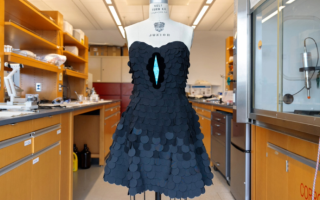
Scientists have created a fabric so black that any black cloak looks neon. This fabric has an extremely high light-absorbing capacity, making it one of the deepest black dyes to date. In their work, the researchers mimicked the coloration of the bird-of-paradise, which uses its velvet-super-soft feathers in courtship dances. These birds are known for their feathers being so black that they absorb light, giving them a bizarre appearance of a bird-shaped void, as if something bird-shaped was Photoshopped and only its stunning blue/green iridescent chest remained. Therefore, a team from Cornell University reverse-engineered the bird-of-paradise's natural camouflage technology and arrived at the darkest fabric ever recorded: reflecting only 0.13% of light, which certainly classifies it as ultra-black, according to results published in the journal Nature Communications. For clarification, 'ultra-black' is defined as anything that reflects less than 0.5% of incident light. The fabric is then exposed in a plasma chamber for light-trapping nanofibers called nanofibers to grow through the fibers. It is the first ultra-black fabric that you can wash without worrying that it will fall apart or be damaged to the point where it looks like you accidentally dried a crow. The process starts with merino wool, dyed with polydopamine, which is artificial melanin. The Cornell team produced something wearable, breathable, and stretchable. Cornell University then decided to apply this color in a practical context that an ordinary person could understand, making a dress inspired by the magnificent bird-of-paradise, including a radiant blue/green chest piece. However, the journal article notes that fashion is not the best use for this ultra-black color; ultimately, this fabric could enhance the performance of cameras, telescopes, and solar panels anywhere light reflection needs to be prevented. Although these tubes are typically used in telescopes.