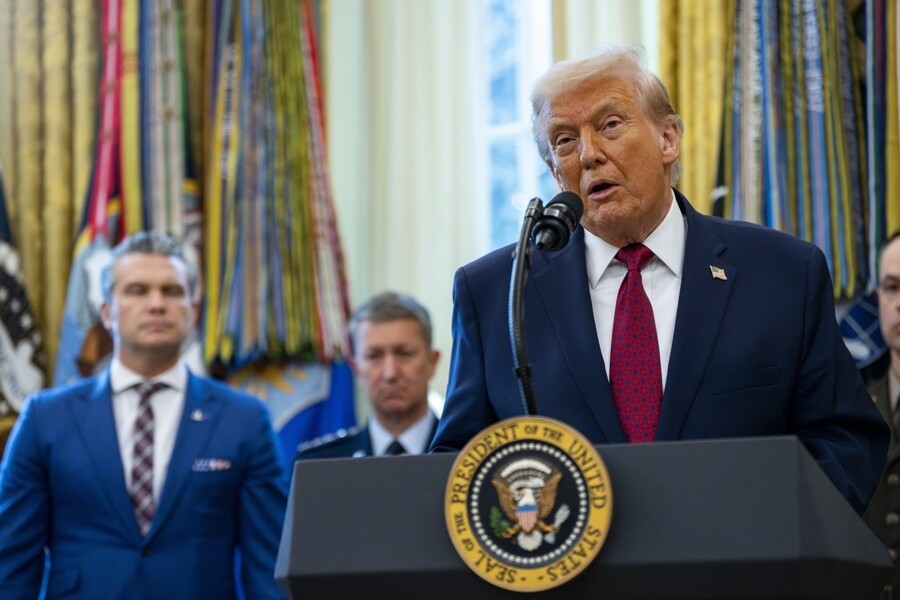
The ambitious plan of US President Donald Trump, outlined for the Venezuelan oil industry following the deposition of Nicolás Maduro, faces a complex mix of technical, financial, and political obstacles that make it very difficult to revive the country's previous crude oil production levels. Venezuela has gone from the 3 million barrels per day it produced before the arrival of chavism over a quarter of a century ago to producing barely a million today. A situation that experts attribute to corruption, lack of maintenance, and the growing packages of sanctions from Washington. This includes last year's order from the Trump government to block Chevron's production, the only US oil company with a presence in the country, which now only maintains minimal operational procedures on Venezuelan soil. Economist Gustavo García, coordinator of the opposition Venezuelan Maria Corina Machado's economic team, considered this week at a forum held by the Atlantic Council in Washington that production could be increased quickly by reinvesting in infrastructure within a 3-4 year period, but he sees the main problem in the electricity sector. "To produce crude, you need to provide, even increase, the electricity supply, and the electricity sector (in Venezuela) is in ruins," García pointed out, considering it necessary to have financing from multilateral organizations such as the International Monetary Fund (IMF), the World Bank (WB), or the Inter-American Development Bank (IDB) to address this issue. Following the capture of Maduro by the United States, Trump met with representatives of oil companies from around the world and assured that "at least 100 billion dollars" will be invested to revitalize the sector and tap into the potential of reserves that the US Geological Service estimates could exceed 600 billion recoverable barrels, mainly in the Orinoco Belt. Trump also knows that US refineries, particularly those operating on the coast of the Gulf of Mexico, are experts at processing heavy crudes like Venezuela's. However, David Goldwyn, president of the energy consultancy Goldwyn Global Strategies, considered at the Atlantic Council forum that Trump's goals are unrealistic, given the "enormous task" of trying to control Venezuela's economy, as the US president intends, and the lack of clarity in the political transition project. To commit to Trump's plan, companies need to resolve their doubts regarding the country's governance (where a chavista interim administration now rules), its financial situation, and the security that can be offered to their investments and operations. In this regard, ExxonMobil, the largest US oil company, has already expressed doubts during its meeting with Trump about returning to Venezuela, from which it left in 2007 by refusing to accept the new contracts proposed by the Venezuelan government, which took the company to court to be compensated for the nationalization of its assets. In turn, Luisa Palacios, a senior researcher at Columbia University, estimated it feasible to reach 1.5 million barrels per day or even a bit more without significant capital investment, but affirmed that to go further, it is necessary to move from the "stabilization" phase of the country currently managed by the Trump government to a "recovery" phase. For Palacios, this phase implies deeper changes in matters such as the rule of law or security in the country. Francisco Monaldi, director of the Energy Program for Latin America at Rice University, agreed on this point, emphasizing that despite the rapid evolution of the situation in Venezuela, there are many "unresolved" issues. Among them, for example, how the global market would absorb these new volumes of Venezuelan production having to sell the crude without the discounts that were applied to customers of Iran, Russia, or China at a time when the price of the barrel is at a two-year low.