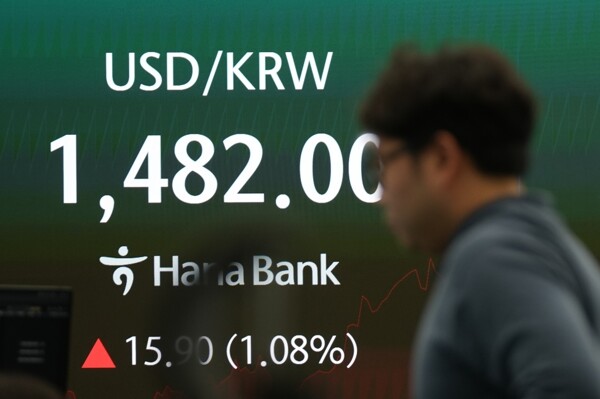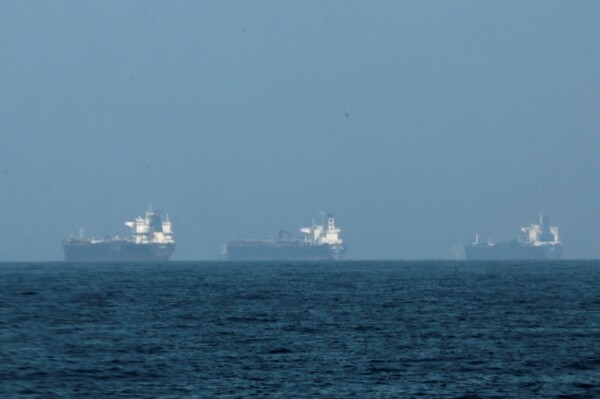
The fear is that a prolonged conflict will mean higher energy costs, logistical disruptions, and a widespread shock to confidence, in a scenario where the world was already facing the impacts of Trump's tariff policy. This scenario increases concerns about possible new measures by the U.S. government and Iran's response in the Strait of Hormuz. In the United States, investors are already warning of a rebound in inflation, so they are adjusting their expectations for interest rates, as seen in the Treasury bond curve, as yields are rising, even the 10-year bond is trading near its highest level in two weeks. Inflationary pressures also come from the rebound in crude oil prices, which today extends its upward trend: the WTI reference started the day at $75.96 per barrel, and Brent is at $82.77 per barrel. The geopolitical tension now concentrated in Iran revives global inflation alerts due to the warning of new disruptions in supply chains, causing episodes of volatility reflected in financial markets. This Tuesday, global stock markets are showing losses due to fears of the extension of the conflict that broke out after the coordinated attack by the United States and Israel against Iran, with the participation of Qatar, Bahrain, and Oman, and on alert for actions to be taken in the Strait of Hormuz, which destabilized indicators in the Mexican market, which had shown some resilience. Even yesterday, the president assured that Mexico was not being affected by the conflict in the Middle East. However, while the Mexican currency remains on the ground of 17 units, in the four days the conflict has already lost 2.36%: this day it was located at 17.50 pesos per dollar. Meanwhile, the dollar, measured through the DXY index, reaches a six-week high at 99.38 points and is once again a preferred refuge for investors, reversing the losses it had accumulated due to market distrust of Trump's unpredictable policies. Iran announces the closure of the Strait of Hormuz: "Not a drop of oil will come out." Additionally, global volatility also reached the Mexican Stock Exchange (BMV), which until yesterday had shown some resistance, but this Tuesday its main index, the S&P/BMV IPyC, adjusted by -5.1%, cutting its 2026 performance to 4.4% from the 11.0% accumulated until February. In both cases, increases of more than 6%. Similarly, natural gas prices skyrocketed, practically doubling, mainly after Qatar, one of the largest importers of this hydrocarbon, paused its production, as well as that of derivatives. In Mexico, President Claudia Sheinbaum repeated this day in her morning press conference that, in the face of a very strong increase in energy prices, the Ministry of Finance and Public Credit will activate the IEPS compensation scheme, so that there are no inflationary effects. She also considered that the effect on finances could be offset: "There is still a part of the importation of gasoline, LP gas, and turbosine and what is exported compensates for that amount," she explained. "Given the resilience of the market and the attractiveness prevailing on emerging markets, it will be opportune to evaluate the performance of the benchmark, reviewing if it is a contained event," explained Monex analysts. It is worth remembering that movements in the Stock Exchange were positive, in February even touching new historical highs, with a recent ceiling close to 72,111 points, confirming the structural strength of the index in the short term, according to specialists. However, the latest statements from President Donald Trump have further increased risk aversion in the market, by declaring that the United States has an almost unlimited supply of certain types of weapons and that the conflict could extend for up to four weeks. A wave of selling in the global market intensified this day and investors are once again taking refuge in the North American currency. In that context, a wave of selling in the global market intensified this day and investors are once again taking refuge in the North American currency.