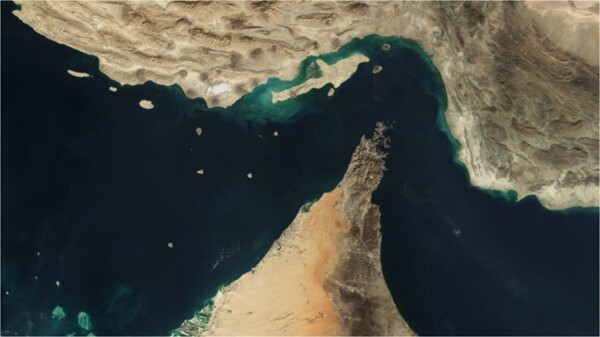
The term «fog of war» refers to the state of confusion and uncertainty that prevails on the battlefield, and the risk of making grave mistakes that comes with it. This principle also applies to the economic consequences of wars, especially when they break out in a region that constitutes a vital corridor for shipping a fifth of the world's oil and a third of its natural gas, which the world needs. Although no one really knows the extent of the impact of the joint American-Israeli strikes on Iran on the global economy, a warning issued on March 6, 2026, reflects these concerns. One energy minister said, «This will lead to damage to the world's economies». The impact includes one of the biggest oil price shocks in history, which pushed the price per barrel to nearly $120 by March 8. In addition, the uncertainty arising from the «economic fog of war» may cause consumers to hesitate to spend, and companies to hesitate to hire and invest, and these conditions will make it difficult for policymakers to steer the economy. There is currently significant uncertainty about the duration of the war in Iran, the number of countries involved, and its cost, and this is likely to persist for some time. All these factors will determine the extent of the war's impact on the U.S. economy and around the world. Observers believe there will be disruptions in oil and liquefied natural gas supplies, which is difficult to ship through the Strait of Hormuz. As for the American economy, it was already showing signs of weakness and stalling, as data released on March 6 showed an unexpected loss of jobs recorded in the previous February. The Biggest Risk Economic experts predict that the biggest economic risk of this war for the United States is inflationary pressures and a slowdown in growth due to rising oil prices. In the late 1970s and at the start of the pandemic, the «Federal Reserve» chose to keep interest rates low to help support the economy and the labor market. However, in both cases, this led to a sharp rise in inflation. Inflation was reduced in the late 1970s and early 1980s through a sharp reversal in monetary policy with rising interest rates, which caused a recession that was the deepest since the 1930s. From «Aiga Times» • The uncertainty arising from the «economic fog of war» may lead consumers to hesitate to spend and companies to hesitate to hire and invest. • Questions about whether the «Federal Reserve» should raise interest rates to combat inflation or lower them to offset the weakness of the economy and rising unemployment. According to preliminary estimates, the cost of the war is about a billion dollars a day. The 1979 Iranian revolution also led to a sharp rise in oil prices, which was a significant factor in the United States and Europe experiencing an economic phenomenon called «stagflation»—a mix of a growth recession and rising inflation. It is unlikely that this will be repeated to the same extent now, as economies are less dependent on oil and natural gas than they were in the late 1970s and early 1980s. What has made it even harder to ease price pressures now are inflation expectations, which feed actual inflation. Difficult Choices Nevertheless, it is still difficult to deal with supply shocks, as the world witnessed with the COVID-19 pandemic, and policymakers are likely to have to make some difficult choices that involve difficult trade-offs. One of the questions that supply shocks raise is whether the U.S. Federal Reserve should raise interest rates to combat inflation or lower them to offset the weakness of the economy and rising unemployment. Raising interest rates reduces inflation by decreasing loan demand and curbing growth, while lowering interest rates has the opposite effect. On March 9, the price of crude oil was approaching $90 a barrel after reaching nearly $120 the day before, up from a price of $67 before the United States and Israel began bombing Iran on February 28, leading to a rise in gasoline prices across the United States. «Stagflation» Most of the oil and liquefied natural gas produced in the Middle East is shipped through the Strait of Hormuz, but the threat of attacks has made travel through this waterway uninsurable, leading to a near-complete halt to shipping through this vital corridor. In addition, this military campaign is costly for the United States, which has already lost aircraft and seen its missile stocks dwindle.