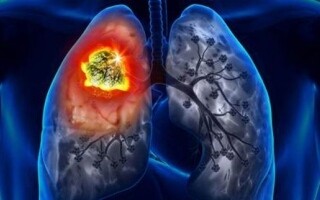
A recent study published in a prestigious scientific journal linked some cases of lung cancer in non-smokers to exposure to air pollution sources such as vehicle exhaust, toxic chemicals, and fumes from cooking. Another study also indicated a possible link between the consumption of ultra-processed foods and an increased risk of lung cancer in non-smokers. However, what concerns researchers today is the increasing incidence of this disease among people who have never smoked cigarettes, which has prompted scientists to search for other risk factors that could explain this phenomenon. Recent research has shown that lung cancer is on the rise among people who have never smoked. Researchers believe this risk may be linked to several factors, such as poor diet quality, exposure to chemicals in food packaging, and harmful substances like acrolein, which is found in processed foods, grilled meats, and cigarette smoke. Nevertheless, researchers emphasize that these results do not prove a direct causal relationship, but they point to factors that warrant further study. The danger of lung cancer lies in the fact that it is often diagnosed after symptoms appear, i.e., at advanced stages when treatment is more difficult. Scientists believe that a group of environmental and dietary factors may play a role in this increase, including air pollution, ultra-processed foods, and exposure to some harmful chemicals and fumes. Estimates from the Centers for Disease Control and Prevention (CDC) suggest that between 10% and 20% of lung cancer cases annually occur in people who have never smoked or have smoked fewer than 100 cigarettes in their lifetime. Lung cancer has long been primarily associated with smoking, but recent studies confirm that smoking is not the only cause of the disease. Lung cancer remains the leading cause of cancer death in the United States and a number of other countries worldwide. Therefore, researchers are focused on better understanding its causes to develop more effective prevention and early detection methods. Currently, low-dose computed tomography (Low-dose CT) screening is recommended for detecting lung cancer in people aged 50 to 80 with a long history of smoking. However, the problem is that less than 15% of people eligible for this screening actually undergo it. As for full-body screenings promoted by some medical centers, they are not a reliable method for detecting lung cancer and may expose patients to additional radiation and high costs without clear benefit. Medical data indicates that the symptoms of lung cancer are similar in smokers and non-smokers, with the most important being: persistent fatigue, chronic cough, coughing up blood, recurring chest pain, wheezing, and shortness of breath. Non-smokers often delay seeing a doctor because they do not expect to get lung cancer, which can delay diagnosis. Doctors recommend seeing a doctor if a cough lasts more than four weeks, blood appears with coughing, or chest pain persists for several weeks without a clear cause. How can the risk of illness be reduced? While complete prevention may be difficult for non-smokers due to the multitude of influencing factors, experts point to several steps that can help reduce the risk: avoiding secondhand smoke and making the home and car smoke-free zones, testing the home for radon and reducing its levels if they are high, adhering to occupational safety guidelines in workplaces that handle chemicals, monitoring air quality in the residential area and reducing exposure to pollution as much as possible. Researchers also believe that environmental policies, such as reducing industrial emissions and promoting clean energy, can play an important role in reducing the risk of lung cancer at the community level.