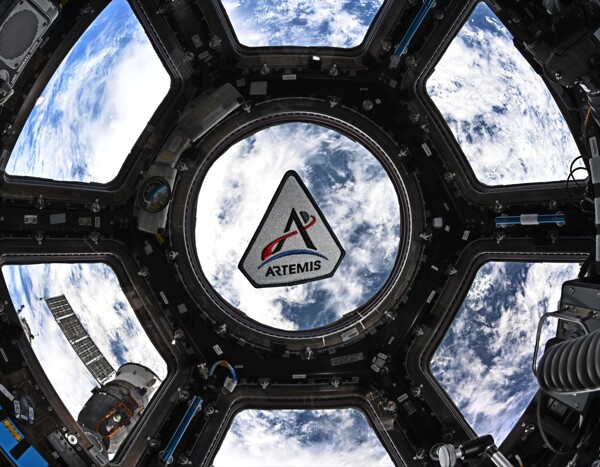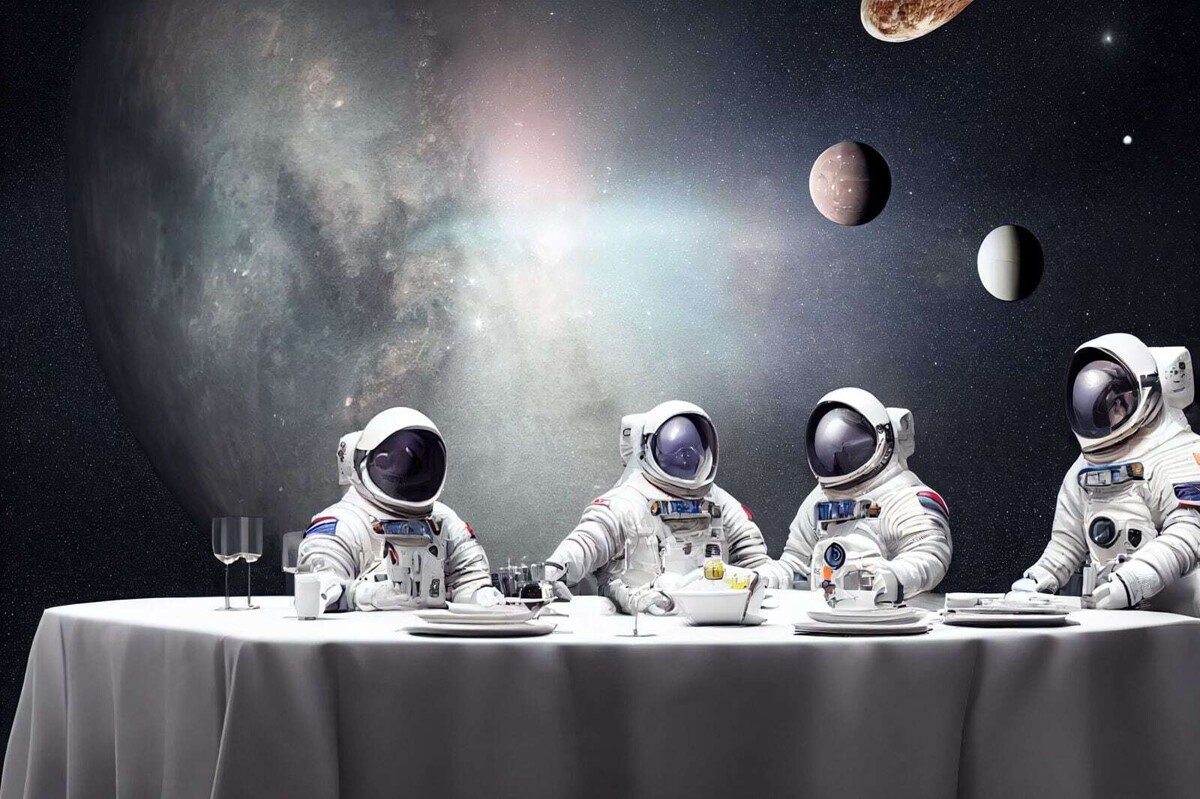
Just as 16th-century sailors carried hardtack and salted meat, the first astronauts faced a similar challenge, but in much more extreme conditions: microgravity, confinement, and the impossibility of cooking conventionally. Moreover, each astronaut can take a small selection of personal foods, as was the case with Koichi Wakata, who chose miso soup adapted for microgravity; while Jean-François Clervoy requested French specialties such as packaged foie gras and high-cuisine dishes developed for space, which introduces a very interesting cultural element: food as a link to Earth. These first missions not only laid the foundation for space conquest but also faced unprecedented challenges, among them, how to feed astronauts outside our planet, for whom they were offered purees compressed inside tubes, similar to toothpaste. In the midst of the Cold War, their goal was to demonstrate that a human could travel to space, survive in microgravity, and return safely to Earth. More than half a century after humanity last saw the Moon from a crewed spacecraft, a new generation of astronauts is once again charting that route. Italian astronauts have brought espresso with them; Russians, traditional soups; and in some missions, spicy sauces have been included, because in microgravity the sense of taste is slightly altered, making flavors seem milder. But eating in space remains a complex act. Experiments aboard the International Space Station have managed to grow lettuce, mustard, and other plants, opening the door to future space agriculture that will be essential for long-duration missions, such as trips to Mars. Thus, astronauts' food has evolved from a technical necessity into a field where science, culture, and pleasure converge. The history of space food is, in many ways, a modern extension of that old obsession with sustaining life in unknown territories. The first steps into space were hardly appetizing. It was on these missions that a symbolic gesture appeared: the first “space” sandwich—though unauthorized—smuggled by an astronaut, showing that even in space, cravings remain human. Today, on the International Space Station, a crewed scientific laboratory in low Earth orbit, jointly built and operated by multiple nations since 1998, food is much more diverse and sophisticated; astronauts consume freeze-dried foods, thermally stabilized dishes like stews or meats in sauce, tortillas instead of bread to avoid crumbs, and snacks like nuts, energy bars, or dried fruit. That's why foods are often more seasoned. Because even in the vacuum of space, far from any earthly kitchen, the act of eating remains deeply human: a way to remember where we come from… and to imagine where we are going. Furthermore, nutrition is key; carefully balanced diets are designed to prevent muscle and bone loss. In recent years, research has taken a step further: it's no longer just about taking food, but about producing it. Beyond the technological milestone, this journey also reactivates an essential question: how is life—and the act of eating—sustained when Earth is left behind? For centuries, human exploration was linked to an essential question: what to eat on the way? The priority was not flavor, but safety: crumbs could interfere with instruments, and liquids could disperse into dangerous little spheres. With the advancement of programs like Apollo, food began to improve. Dehydrated foods that could be rehydrated with water were introduced, as well as more sophisticated packaging that allowed for some variety. In the midst of the race, missions such as those of the Mercury program, developed by NASA between 1958 and 1963, marked the beginning of the United States' crewed space exploration. The menu can include everything from chicken with rice to pasta, curry, or even desserts like brownies. The lack of gravity changes the way liquids and odors behave; even the human body experiences a kind of constant congestion, which affects the palate. John Glenn, one of the first to orbit the Earth in 1962, in 4 hours and 55 minutes circled the world three times in his Friendship 7 space capsule, ate a type of applesauce that had to be ingested carefully to prevent it from floating in the spacecraft. On April 1, at 6:35 pm EDT, the Artemis II mission launched aboard the powerful Space Launch System from the Kennedy Space Center, carrying four crew members in the Orion spacecraft on a flyby around the Moon.