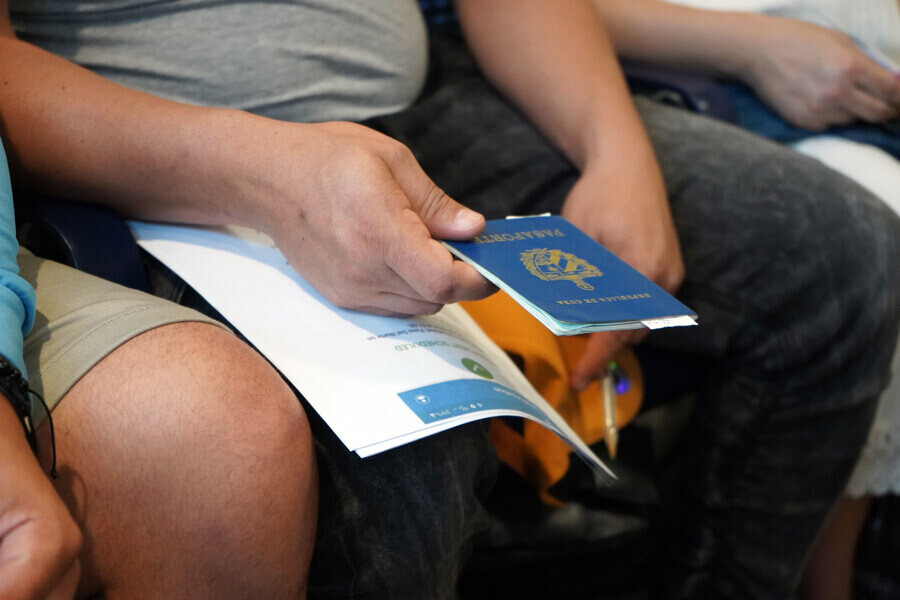
The Donald Trump administration has sent a new directive to embassy and consulate officials, expanding the list of medical conditions that could make a foreigner seeking to reside in the country ineligible. While the U.S. has required health screenings for immigrant visa applicants for decades, the new directive specifically instructs visa officers to 'consider the applicant's health.' It states that conditions such as obesity, which can cause asthma, sleep apnea, and hypertension, or diabetes, among others, can be grounds for denying an application. 'All of these conditions may require costly and prolonged medical care,' the measure notes. Additionally, officials are instructed to determine if applicants have the resources to pay for medical treatment without U.S. government assistance. Since his first term, Trump and his advisors have insisted on denying permanent residency to individuals who could become a public charge. The administration of former President Joe Biden (2021-2025) had rolled back several of the new public charge rules issued during the Republican's first term, which the White House is now reinstating as part of its immigration policy. The new order also seeks to consider a person ineligible to enter the U.S. if their age makes them more likely to depend on public assistance. The guide also urges officials to consider the health of family members, including the children and elderly parents of applicants.