In the new political thriller 'House of Dynamite' by director Kathryn Bigelow, the President of the United States faces a difficult choice. Imagine the tension he feels as he struggles to recall material he learned vaguely once but has never reviewed. Now, imagine that hundreds of millions of lives are at stake, as depicted in the novel 'House of Dynamite' during a nuclear crisis, and the president may have only minutes to act. The suddenness and brutality of nuclear war mean that intuition or impulse could dangerously override deliberate thinking.
What can be done about a system that places the burden of the world's fate on a single individual? Many proposed solutions seek to involve more than one person in the decision-making process. Participants in a consultative meeting might be required to jointly approve or authorize the use of nuclear weapons. Absolute power imposes higher demands on an individual's decision-making capabilities, which will be negatively affected by the uncertainty and stress generated by a nuclear crisis, and the president's unpreparedness only worsens the situation. A nuclear crisis, akin to a pop quiz for a high school student, will impact the president's psychology.
This is especially true for a situation known as 'launch under attack,' where the president is pressured to act quickly because the impending attack is large enough to potentially weaken the United States' ability to respond. To address this, the White House should better brief the president on nuclear crises through regular drills and briefings aimed at clarifying the specifics of crises. This type of nuclear briefing won't resolve the current nuclear tension, but it will better prepare the president for the most important decision of his life, emphasizing the uncertainty and uncontrollability of nuclear crises.
Presidential nuclear briefings are highly confidential, and their details are not known for certain, but according to most reports, presidents generally receive a short briefing just hours before taking office, focusing on how to issue an order for a nuclear strike. The former chief of staff to President George W. Bush described this briefing as 'extremely routine, somewhat like using a television remote.' There's no need to go that far to recognize the benefit of the president paying closer attention to the gravity and uncertainty of nuclear war.
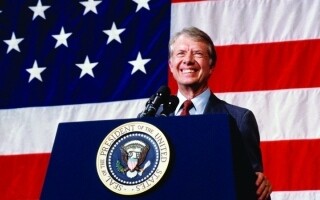
While presidents may be briefed on emerging changes in troop levels and exercise plans, they are never actually involved in the real nuclear decision-making process, nor are they required to practice it. The only exception is Jimmy Carter, still the only president to have participated in nuclear command and control exercises. Nuclear training for the president won't solve all problems, but such training could move us to a world where perceptions of nuclear war remain like something out of the movie 'House of Dynamite'—in the realm of fiction.
After the Cold War, the rationale behind the principle of the president's sole authority to launch nuclear weapons was the fear of an enemy attack that would prevent the U.S. from responding by disabling the government or the nation's command and control system—the 'launch under attack' scenario. By concentrating nuclear command in the hands of one person rather than a committee or Congress, sole authority allows for the rapid response needed to avoid such a scenario.
In the film, the president (played by Idris Elba) must order a nuclear strike against America's adversaries, who may have launched the missile, or wait for the missile to destroy Chicago? To assist him, a close military aide pulls a three-part file from a black briefcase and explains the color-coded, laminated pages: these are the nuclear strike options. The president sighs as he flips through the pages: 'They've only held one meeting since I took the oath.' As the nation's fate hangs in the balance, the president doesn't know what to do and has very little time to decide.
For Elba as the Commander in Chief, nuclear war was once far from sight and mind. The black nuclear football that follows the president everywhere, the color-coded pages of the binder, the short response time, the president's unpreparedness—all these factors seem to the audience like a fictional story, as if Hollywood is resorting to its usual exciting tricks. As the film suggests, real presidents may be unprepared to bear the burden imposed on them by their sole authority to order a nuclear strike. It involves an intercontinental ballistic missile of unknown origin heading toward the United States at high speed. Kennedy's caution and hesitation paid off, as American policymakers had downplayed the level of Soviet deployment in Cuba, and following the group's advice—launching airstrikes—would have certainly led to an escalation of the war, possibly to a nuclear one.
In 1962, President John Kennedy, fortunately, resisted his advisors' early and overwhelming advice to bomb Cuba during the Cuban Missile Crisis, although he had initially agreed.