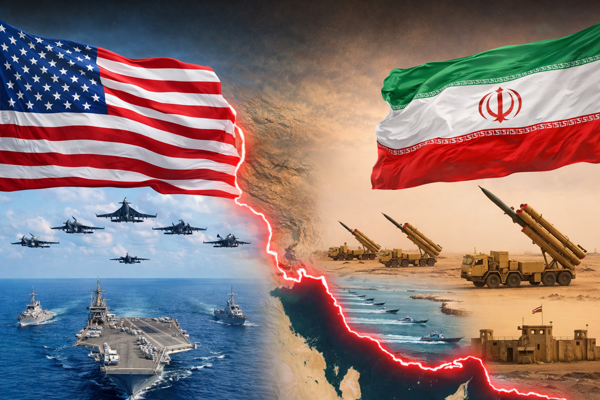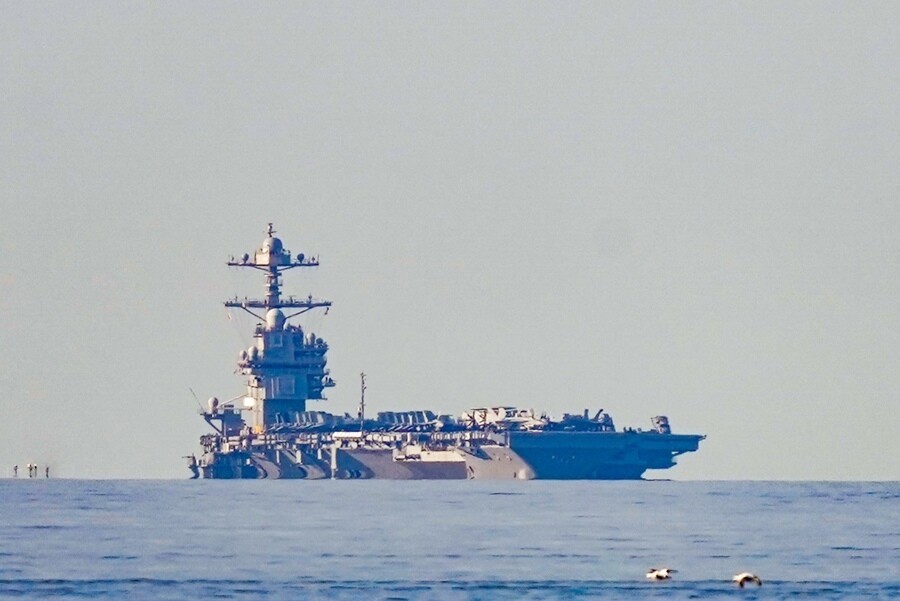
In recent months, the United States has reinforced its military presence in the Caribbean and the Latin American Pacific with ships, combat aircraft, and special forces, amid growing tensions with Venezuela. This deployment, framed by the Trump administration as part of its 'Southern Spear' initiative and the fight against narcotics, has seen the Caribbean and the entrance to the eastern Pacific become the stage for a major expansion of U.S. military power.
Since August, this expansion has included guided-missile destroyers, nuclear attack submarines, F-35 aircraft, attack helicopters, amphibious hovercraft, surveillance drones, and troops, according to Washington, for surveillance and counter-narcotics operations. An analysis by the Center for Strategic and International Studies (CSIS) indicates the initial fleet in the southern Caribbean consisted of Arleigh Burke-class destroyers, amphibious ships, a fast-attack submarine, F-35 aircraft, and the use of MQ-9 drones. The CSIS also notes that the total number of U.S. troops projected could reach tens of thousands, making this operation the largest U.S. military presence in the region in decades.
Meanwhile, the Pentagon has acknowledged that it has presented Trump with various options, including attacks on Venezuelan military facilities. However, the Prime Minister of Grenada, Dickon Mitchell, stated they will analyze the legal and technical criteria as it is a civil installation. The President of Panama, José Raúl Mulino, denied that the country is participating in any 'hostile act against Venezuela' and maintained that the presence of U.S. military personnel responds to cooperation agreements.
Alliances have been formed, visits from U.S. officials have taken place, and military and civilian infrastructure has been utilized in several Caribbean and Central American countries. Trinidad and Tobago, just a few kilometers from the Venezuelan coast, is hosting U.S. Navy exercises in urban and rural areas. Puerto Rico has become a strategic platform, with part of the former Roosevelt Roads airbase—closed in 2004—now back under U.S. operational control. Grenada has received a request from Washington to install radar and military equipment at Maurice Bishop International Airport.