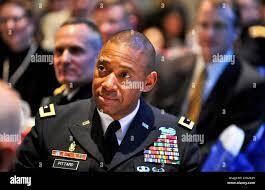
Madrid, November 24, 2025 - Total News Agency - TNA - Retired Major General of the United States Army, Dana Pittard, warned in an interview with Fox News that the peace agreement being negotiated between Ukraine and Russia could serve to stop the fighting, but it does not constitute a solid basis for lasting peace.
In this sense, he warned that the West must maintain military and diplomatic support, ensure Ukraine's full participation in the agreement's design, and prevent the pact from being reduced to an informal or temporary ceasefire.
According to Pittard, the proposed negotiated plan so far could succeed in stopping crossfire and containing a major escalation, but he warned that “stopping the war is not the same as ensuring peace”.
On the other hand, the mention of Venezuela is because Pittard addressed, in the same interview, the deterioration of relations between the U.S. and Caracas and its possible indirect effect on the European front.
The former military official stated that any distraction in the Latin American region could provide Russia with additional space to maneuver in Europe and “build secondary tensions that could later affect NATO”.
In this scenario, Pittard considered that although the plan could change the dynamics of the conflict, the lack of firm guarantees for Ukraine and the lack of trust in Russia as a counterpart harden the outlook.
The retired general pointed out that the negotiation office “cannot replace the permanent defense and deterrence strategy that Ukraine needs, nor can it grant credibility if it is based solely on the unilateral will of Moscow”.
This dimension, he warned, adds complexity to the overall Western strategy to contain Moscow.
International analysts agree that we are at a turning point: Ukraine is evaluating whether to preserve its sovereignty, reject territorial concessions, and secure Western support or accept a ceasefire that could limit its future influence.
The alert from a retired general shows that the Western community cannot rest on false victories or consider the war closed, as it could soon lead to new forms of confrontation.
Among the factors that, in his opinion, could prevent a genuinely sustainable agreement are the depth of concessions Ukraine might make and the persistence of Russia's expansionist ambitions.
Volodymyr Zelenskyy himself has stated that his country must choose between “its dignity or losing the support of the U.S.” Meanwhile, the European Union and several NATO countries have expressed reservations about the peace draft, warning that peace cannot be synonymous with capitulation.
For the writing of this agency, it is key to emphasize that Dana Pittard's analysis underscores that peace processes in the context of conflicts between great powers require not only the negotiation of a ceasefire, but also an institutional design that guarantees security, real monitoring of its compliance, and the full participation of the threatened party.
His analysis is inserted in a context of growing tension between the U.S. and Venezuela and its possible indirect effect on the European front.
Pittard's statement highlights the internal tensions between Western allies and Ukraine regarding the negotiated framework.
In the case of Ukraine-Russia, the obstacles go beyond the battlefield and involve security architecture, external guarantees, and the political will for active reconstruction.
Ultimately, a possible agreement between Ukraine and Russia could mean a tactical respite, but it is far from the strategic solution that authentic peace demands.