The topic is the savage and merciless invasion of Russia into Ukraine and the strong military deployment in the Caribbean, which has already claimed the lives of eighty suspected drug traffickers and fills the tyrannical regime of Nicolás Maduro in Venezuela with fear, which is also becoming more isolated every day.
This week, the world learned from a leak of communications between their respective delegates that the 28-point plan proposed by Trump to Volodymyr Zelensky (besieged by corruption allegations in his inner circle) as a basis for achieving peace was produced by Vladimir Putin and brought to the negotiation table without the US changing a single comma or informing the European Community.
There, he faces a gigantic challenge, as it is not viable to maintain that enormous naval afloat force – even with bases in Trinidad and Tobago, Panama, and the Dominican Republic – for months, nor is it advisable to trigger a land invasion, as it would undoubtedly cause widespread repulsion in the region. I also do not believe that the military threat looming over Nicolás Maduro could lead him to abandon power in exchange for refuge in Russia and an amnesty for his numerous crimes against humanity; Diosdado Cabello and the 2,000 generals – more than all of NATO combined – who make up his network of corruption and narco-terrorism would not accept it, as they could not aspire to such a privilege.
Thus, another of Trump's traps would be closed. Finally, I remind everyone that today at 4:00 PM, we will go to Plaza de Mayo to demand the immediate release of the military who won the war against terrorist organizations in the 70's and 80's; they prevented Argentina from suffering the same fate that still overshadows Venezuela, Nicaragua, and Cuba.
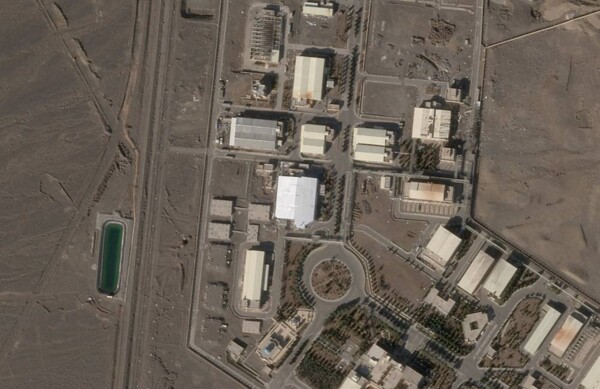
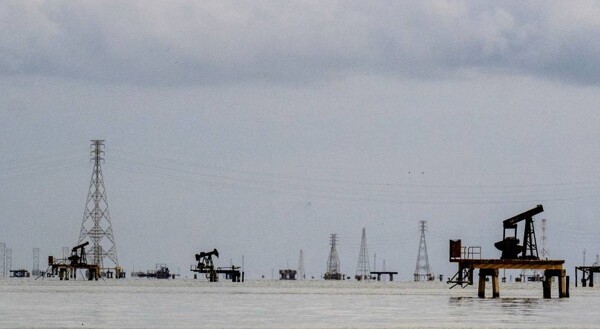
Therefore, it seems to me that the only available option will be to carry out strategic bombings, like the one that damaged Iranian nuclear facilities, against drug production bases, and perhaps also the oil fields, although it is very likely that the appetites of US refineries for Venezuelan heavy crude might advise against it.
If the Maduro regime were forced by its own economic inability to cut the umbilical cord that allows it to subsist, even in the midst of the terminal crisis it suffers, the criminal Miguel Díaz-Canel, who prolongs the Castros' tyranny that has subjugated the Cuban people for sixty-seven years, would also fall in a short time.
According to rumors, that plan cannot be more humiliating for the aggrieved Ukraine, under threat of ceasing to receive aid (operational intelligence and long-range military material) if it is not accepted, as it implies the cession of a large part of Ukrainian territory that Russia has not been able to conquer in four years of war, the reduction of its armed forces to a merely decorative level, and the prohibition on the deployment of an international army to guarantee the inviolability of the new borders and prevent new attacks on any European country.
The other scenario in which the presidential activity is being played out is Venezuela, even more complex because it affects South America, an area of exclusive US influence as was agreed – as I believe – at the meeting in Anchorage, Alaska, between Trump and Putin.
There will be those of us who feel shame for the silence with which this cynical and hypocritical society enabled the death sentences that rogue judges, co-opted by the Kirchnerist movement, imposed on them in Stalinist trials.
By Enrique Guillermo Avogadro
"Seek the truth from the facts" Deng Xiaoping
It is not new, but the accelerated advance in communication technology has produced a transcendent modification in the way nations negotiated; today, the secular diplomacy exercised by professionals in international relations has given way to the direct action of leaders who, clearly, carries the risky gravitation of personal ideological preferences when acting in external scenarios and, even more so, when closing trade agreements with other countries.
The President of the United States, with the traits of a tough negotiator, is giving the world lessons in pragmatism, but he has dynamited both the framework of international trade that allowed an unprecedented global growth and the ties with his allies, based on his country's strong leadership in the global scenario, sustained in turn by its superiority in all fields, from the military to technological innovation, which led to the longest period of peace in European history.
It is true that the application of heavy tariffs on the import of products, negotiated bilaterally according to each nation's adherence to the President's preferences, has produced a positive trade balance that reached three trillion dollars in just the first year of his current government, something that surprised many experts who spoke out against it, but his own society is beginning to suffer from rising prices in those products and has, at least for now, not seen a significant reduction in the size of the state.
But where this new attitude of the United States is most serious is in the great armed conflicts that are currently developing.