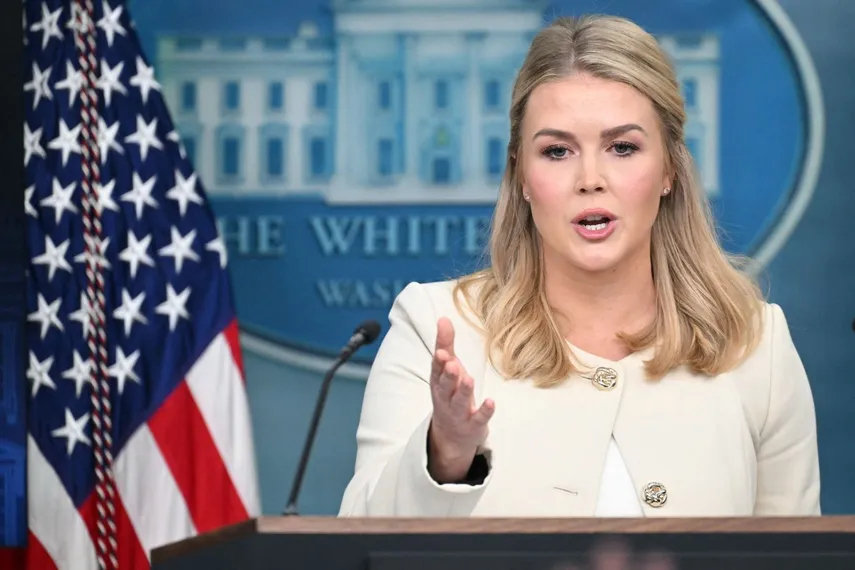
Washington / Caracas, December 2, 2025 – Total News Agency-TNA – The White House defended on Monday the legality of the U.S. naval operation that, on September 2, destroyed a vessel used for trafficking cocaine from Venezuela, as part of missions aimed at curbing the flow of narcotics leaving ports controlled by the Nicolás Maduro regime for the United States. The incident, which included a second strike on the vessel to ensure its neutralization, has sparked intense political debate in Washington, where sectors of the Democratic Party—traditionally receptive to the chavismo lobby—are seeking to cast doubt on the military's actions while Congress advances a bipartisan investigation. White House Press Secretary Karoline Leavitt emphasized that Admiral Frank “Mitch” Bradley, the official in charge of the operation, acted “within his authority and the law.” Senate Republican Leader John Thune defended the necessity of these operations to prevent tons of Venezuelan cocaine from continuing to enter U.S. territory and announced that committees will investigate the details of the operation. The Secretary of Defense later reaffirmed on social media that Bradley is “an American hero” and that the operations comply with international law and the norms of armed conflict. In contrast, more confrontational voices emerged from Democratic circles: Chuck Schumer accused Hegseth of being a “national disgrace” and demanded the release of the attack video. This narrative—reproduced for years by Maduro's spokespeople in international forums—serves as cover for a state that has become a logistical platform for drug trafficking, a condition noted by multiple U.S. agencies and multilateral organizations. Despite this, the reaction in Congress was largely cautious. Admiral Bradley, who was promoted to lead Special Operations Command weeks later, will hold a classified briefing for lawmakers from both chambers on Thursday. The news report that questioned the second strike was quickly amplified by media outlets aligned with Democratic positions and by the communication lobby of the Venezuelan regime, which is attempting to globally establish the idea that anti-drug missions constitute “political aggressions.” More than 80 traffickers have died in these clashes in recent months, while the regime insists on denouncing an external aggression to hide its complicity with transnational criminal networks. Admiral Bradley's appearance before Congress will be key to clearing up internal doubts in Washington and, at the same time, to deactivating the communication campaign of the Maduro regime, which seeks to turn an anti-drug operation into an international political conflict. Washington maintains—with abundant intelligence evidence—that part of these structures are integrated by civilian and military officials of the Maduro regime. From Caracas, the Venezuelan leader responded with his usual discursive strategy: he denounced supposed “aggressions” against Venezuelan sovereignty and accused the United States of waging a “psychological war.” Lawmakers from both parties, however, agreed that the priority is to determine the facts with precision and to ensure that the mission fully complied with the legal framework. In parallel, Trump met with his national security cabinet to evaluate next steps, including the possibility of expanding operations against the criminal networks operating within Venezuela that have caused a sustained increase in cocaine trafficking to the United States in recent years. The National Assembly controlled by the ruling party announced the opening of an investigation into the deaths of Venezuelans linked to vessels used by criminal groups, which constitutes—according to regional observers—another attempt by the regime to victimize itself before the international community and evade its direct responsibility for the expansion of drug trafficking in the Caribbean. The September 2 incident is part of a series of U.S. operations in the Caribbean and the eastern Pacific aimed at dismantling cocaine routes operating from ports and coasts under chavista control. According to the explanation, Defense Secretary Pete Hegseth explicitly authorized the use of kinetic fire to eliminate the threat posed by the vessel used by drug trafficking organizations operating under the protection of the Venezuelan state apparatus. President Donald Trump, when consulted by journalists, clarified that “he would not have wanted a second attack,” but he maintained his support for Hegseth.