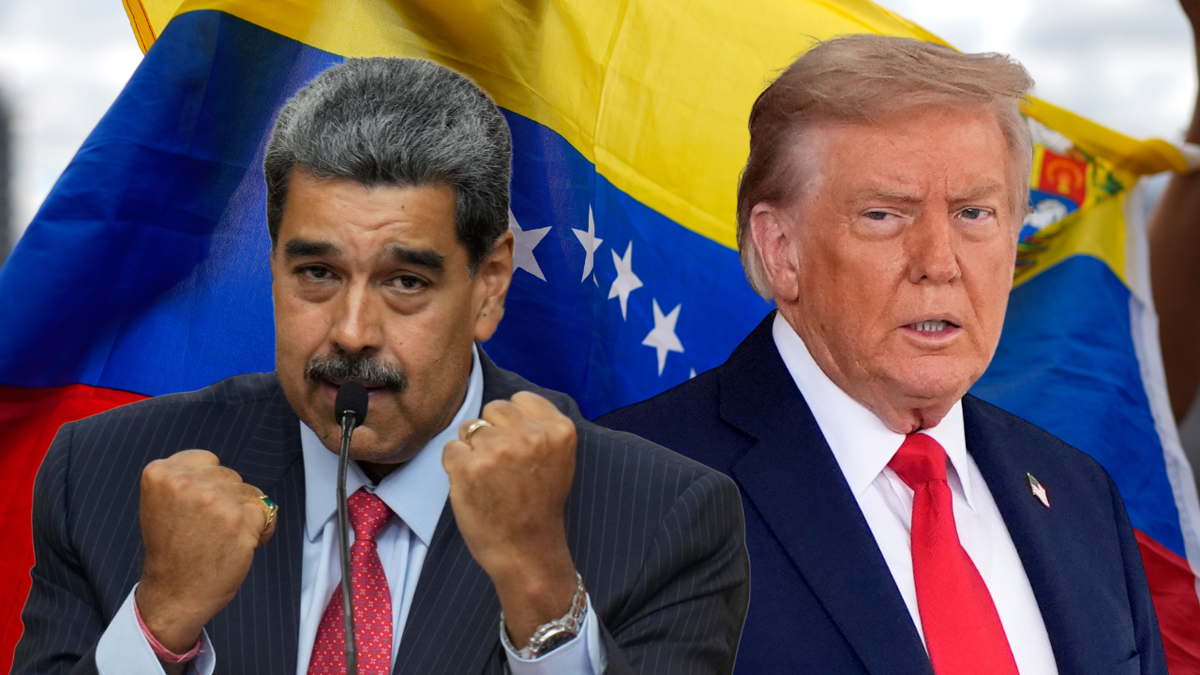
Bilateral relations between the United States and Venezuela have escalated dramatically this week following repeated statements from U.S. President Donald Trump regarding the imminence of “land operations” officially aimed at combating drug trafficking, raising concerns over a potential armed conflict in Latin America. The growing tension comes amid expanded military operations in the Caribbean, economic sanctions, and direct actions that Caracas has described as unilateral aggressions. Trump publicly stated that after a “significant” reduction in maritime drug trafficking to the United States, his government is ready to move to the land phase of its offensive against drug traffickers allegedly linked to Venezuela and other countries in the region. Recently, the Trump administration unilaterally suspended repatriation flights for Venezuelan migrants and has conducted arrests and asset seizures, such as the case of a sanctioned Venezuelan oil tanker, which increased bilateral tension and was labeled by the Venezuelan government as an act of “international piracy.” The “narco-terrorist” government of Nicolás Maduro has responded with a call for “absolute serenity” and the defense of national sovereignty, conducting military exercises and declaring that any aggression will be met with firmness. These statements, however, have set off diplomatic alarms in Caracas and in regional governments, which warn of the risk of an escalation that could go beyond the fight against drug trafficking. The White House has defended this strategy as part of a broader military operation called Operation Southern Spear, aimed at combating transnational criminal networks. This campaign, officially launched in mid-November and including air and sea attacks on vessels suspected of transporting drugs, represents the most significant U.S. military deployment in the Caribbean since the Cuban Missile Crisis in 1962. Geopolitical experts suggest that the U.S. government has been justifying these moves under the narrative of the fight against drugs, while the Venezuelan opposition and international analysts interpret that the true objective might include pressuring for a regime change and weakening the influence of Nicolás Maduro. Caracas has denounced that Washington uses the anti-drug discourse as a pretext to intervene in the country's internal affairs and has requested urgent meetings in international forums such as the UN Security Council. Likewise, the regime has strengthened ties with powers like Russia, whose president Vladimir Putin has reiterated his support for the Maduro regime in this context of crisis, recalibring strategic alliances in the face of U.S. pressure. The possibility of land incursions, although still without precise details on how and when they might occur, has generated a strong lobby that translates into concerns in neighboring countries and regional organizations, as well as among U.S. lawmakers, including members of Congress who have asked for greater transparency on recent military actions against vessels suspected of drug trafficking. International bodies, regional governments, and analysts warn that a military escalation could have far-reaching humanitarian, political, and economic consequences, affecting the stability of the continent at a time already marked by migration crises and growing geopolitical tensions. In his statements, the president emphasized that the attacks will be directed at “horrible people” involved in drug trafficking and do not constitute, in his view, a traditional military invasion against Venezuela as a sovereign state. “These are not just land attacks in Venezuela. These are attacks against horrible people who bring drugs and kill our people,” insisted Trump, stressing that it is an evolving campaign that seeks to curb the arrival of narcotics to U.S. territory.