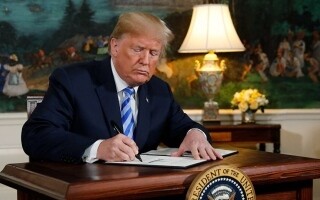
The White House announced on Tuesday that US President Donald Trump has signed a presidential proclamation expanding and tightening entry restrictions for citizens of several foreign countries. This measure is based on intelligence assessments and recent data, aimed at "protecting the national security of the United States" from potential threats.
According to the official White House website, the expanded list of countries with restrictions (full or partial) includes 6 Arab countries: Syria, Libya, Sudan, Somalia, Yemen, and Mauritania, as well as individuals holding travel documents issued by the Palestinian Authority.
The distribution is as follows: Full restrictions (new additions): Syria. Full restrictions (continuation of previous decisions): Libya, Sudan, Somalia, and Yemen. Partial restrictions (new additions): Mauritania. Special category (new addition): Holders of Palestinian travel documents (full restrictions).
The proclamation explains that the new measures resulted from "severe and continuing shortcomings" in the vetting systems and information-sharing of the targeted countries.
The updates include: A new full ban: affecting 5 additional countries—Syria, Burkina Faso, Mali, Niger, and South Sudan, as well as holders of Palestinian Authority documents. Tightening of restrictions: Previous partial restrictions were converted to full restrictions for two countries—Laos and Sierra Leone. New partial restrictions: Affected 15 additional countries, most notably Mauritania, Nigeria, Senegal, Zimbabwe, and Angola.
Continued and modified decisions The presidential proclamation maintained the full restrictions previously imposed on the original 12 countries classified as "high-risk" (which include Iran, Afghanistan, and a number of Arab and African countries). Partial restrictions also continued for Venezuela and Cuba.
In a contrasting move, the decision eased restrictions on Turkmenistan by allowing non-immigrant visas, while continuing to suspend immigration from the country due to its recent security cooperation with Washington.
Justification for the decision and exceptions The White House attributed the necessity of this decision to several reasons: Widespread corruption and the unreliability of civil documents and birth registration systems in these countries. The refusal of some countries to share security information or repatriate their deported citizens. "Citizenship by investment" programs that could conceal travelers' true identities. Terrorist activity and governmental instability that impede the conduct of thorough security vetting.
The statement also noted that the proclamation includes exceptions for lawful permanent residents, certain visa categories (such as for diplomats), and cases where officials determine that entry serves the national interest of the United States.