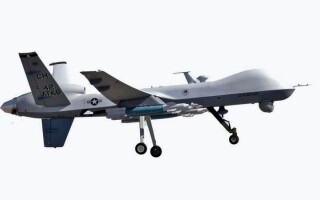
The visible spread of technologies that generate military products has sparked a public debate about the extent to which these technologies can be normalized outside of military use. On one hand, many emerging military surveillance technologies have legitimate uses. For instance, many police officers considering using drones as a first-response team say it could reduce the time it takes to respond to someone in need of help, thus saving lives. On the other hand, it is difficult for many to ignore the risks of mass privacy violations posed by these technologies. For example, "Stingray" devices are capable of intercepting data from all cell phones in a given area, raising concerns about the random collection of Americans' data, amidst fears that their presence at protests could negatively impact the right to peaceful assembly. Police departments have also adopted these systems to monitor and gather information on suspected criminals, although company "L3Harris" is now phasing them out. Drones Defense contractors are similarly looking to capitalize on drones tested in wars to market them in the booming local market. Democratic Representative from California, Jimmy Gomez, has introduced a bill to prohibit the use of military drones for protest surveillance. As the use of drones promoted by arms manufacturers increases, surveillance technologies used in wars tend to turn civilians into adversaries in their own communities, a trend that deserves closer scrutiny. There has been a significant increase in interest from security agencies in "drones as a first response" programs. The market for drones used in public safety is expected to nearly triple in the next ten years, and continued federal funding and legislative efforts are expected to support this sector. The Trump administration allocated $1.5 billion for drone technologies and countermeasures, including $500 million for counter-drone security strategies adopted by state and local governments, in preparation for hosting next year's FIFA World Cup. At the same time, the Drone Act, included in the National Defense Authorization Act for fiscal year 2026, allows police to purchase and operate these systems with federal grants, which would increase federal funding for drone purchases if passed. Nearly 1,000 law enforcement and security agencies in the United States use the "Skydio" drone, which has been "spotted" participating in the war in Ukraine for purposes ranging from first response to crowd surveillance at public events. As the use of drones promoted by arms manufacturers increases, surveillance technologies used in wars tend to turn civilians into adversaries in their own communities, a trend that deserves closer scrutiny. Arms manufacturers have created a supply chain that links products developed for conflicts abroad with the growing domestic demand for similar technologies. In the fall of 2023, U.S. Customs and Border Protection awarded "Teal Drones" a $1.8 million contract to provide these reconnaissance capabilities to border patrol agents. This contract is part of a much larger, though non-binding, $90 million purchasing agreement signed by U.S. Customs and Border Protection in 2021 with several other companies, including "Vantage Robotics," which contracts with the Department of Defense (Pentagon) and manufactures drones, to purchase more border surveillance drones. In 2019, U.S. Customs and Border Protection awarded "AeroVironment" a $5.25 million contract to use "Puma 3 AE" drones that provide reconnaissance and surveillance and intelligence-gathering capabilities for armies around the world, to be used by border patrol agents. Indeed, the financial opportunities are clear for defense companies, and to capitalize on them, many of these companies offer extensive pilot programs and trials for police and border patrol programs, or make substantial modifications to their products to facilitate their adoption in the commercial sector. It is expected that there will be promotional efforts, but some of these efforts have gone too far, as intensive awareness campaigns by "Skydio" have successfully turned many police officers into promoters of its product. Defense companies are reaping huge profits by moving equipment from war zones back home by leveraging the dual-use of many products, where defense technologies can be integrated into the commercial sector and vice versa. Defense contractor companies like "Palantir," "Skydio," and "General Atomics" have built a large base in their own country for surveillance technologies, especially those related to drones, leading to the spread of war-tested military technology into the civilian sector. Dual-Use There are prominent examples of this trend toward dual-use, requiring technology tested in the wars in Iraq and Afghanistan as part of the U.S. "War on Terror." The role of these police officers was not limited to testing and recommending "Skydio" products; some appeared in "Skydio's" promotional materials and helped the company obtain exemptions from the Federal Aviation Administration to circumvent existing regulations on how to test and operate its drones. Arms manufacturers have created a supply chain that links products developed for conflicts abroad with the growing domestic demand for similar technologies. In 2022, U.S. Customs and Border Protection awarded "General Atomics" a contract worth up to $528 million to supply "Reaper" drones. "Teal Drones"'s "Golden Eagle" and "TII" drones, which contracts with the U.S. Army and is based in Utah, have been widely deployed in Ukraine, where "TII" drones provide reconnaissance capabilities to Ukrainian pilots fighting Russian forces. "Palantir" has sold similar software to other government agencies and won a $30 million contract with U.S. Immigration and Customs Enforcement to help track illegal immigrants. "L3Harris"'s "Stingray" devices or cell tower simulators are sophisticated devices for monitoring mobile phones, originally designed for military use and also utilized during the wars in Afghanistan and Iraq. "Palantir"'s "Gotham" software platform, controversial in its own right, was initially marketed in 2008 as an intelligence program for defense and counter-terrorism purposes. After the platform was used to predict adversaries' use of improvised explosive devices during the wars in Iraq and Afghanistan, it was later adopted by Israeli defense and intelligence agencies during the war on Gaza, while "Palantir" simultaneously marketed "Gotham" as a data-driven policing and security tool. Now the platform is being adopted among U.S. security agencies, and hundreds of police departments can use "Gotham" to analyze information about the whereabouts of civilians. "Skydio" has won major contracts in this regard, including a $4.6 million contract to supply drones to the police in Brooklyn Park, Minnesota. At the same time, universities like Yale University in the U.S. have used "Skydio" drones and other commercial drones to monitor students on-campus protests, reflecting a broader trend among higher education institutions to integrate drones into campus security. The "MQ-9" drone has been used to direct lethal strikes in the wars in Afghanistan and Iraq, and in the Caribbean region, and has also been used to search for missing persons. U.S. Customs and Border Protection used it to support federal law enforcement operations during protests in Los Angeles at the beginning of this year.