US President Donald Trump accused Venezuelan President Nicolás Maduro of controlling the Venezuelan gang 'Tren de Aragua', claiming he sent them to the US to sow criminal chaos. These allegations are not supported by US intelligence assessments.
By summer, despite early attempts to negotiate with Maduro, including an offer to expand operations of US oil companies in Venezuela, Trump chose the military path. However, the possibility of a ground invasion, which could lead to American casualties, may be an unacceptable option for a president who pledged not to start more wars. His military intervention has so far been limited to long-range air and sea strikes.
Trump's special envoy to Venezuela during his first term, Elliott Abrams, in a recent 'War School' podcast, said he envisions the president 'will declare victory in a month or two, citing a big drop in drug smuggling across the sea.' However, he warned: 'If Maduro survives and Trump withdraws, that will be a defeat.'
Despite strong opposition from some members of Congress to continuing US military operations in the Caribbean and the eastern Pacific without a legislative mandate, as well as any potential ground invasion of Venezuela, other members have called on Trump to take more decisive action.
Trump's focus on Venezuela combines several domestic political goals and the priorities of his top advisors. The administration's new national security strategy calls for shifting US focus to the Western Hemisphere, rewarding countries that adhere to 'America First' policies and punishing those that do not.
For Secretary of State Marco Rubio, the son of a Cuban immigrant who fled the island in the 1950s, the collapse of the communist government in Cuba is his primary goal. Cuba's economy, under Maduro and his predecessor Hugo Chávez, depended on Venezuelan support through oil supplies, despite tightened US sanctions. Thus, from Rubio's perspective, the end of Maduro's rule portends the collapse of the Havana government.
According to one US official, Rubio was the driving force behind the military buildup policy against Venezuela in recent months, although he has not yet succeeded in convincing the president to use direct military force.
Stephen Miller, White House deputy chief of staff and architect of Trump's hardline immigration policy, sees the hundreds of thousands of Venezuelans who fled to the US during Trump's first term and former President Joe Biden's administration as an easy political target.
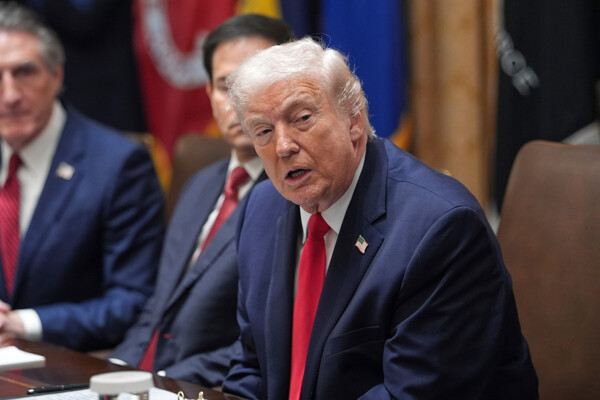
'We are not going to invade Venezuela unless we have to,' Trump said last month, adding that he has 'many options' if Maduro doesn't step down.
During the Biden administration, the number of Venezuelians arriving in the US increased significantly, many entered the country illegally, and many were allowed to stay under temporary protected status, recognizing the economic and political difficulties that, according to Trump himself, caused them to flee.
In one of his first acts of his second term, Trump ordered an end to temporary protected status for Venezuelians and other immigrants and began large-scale deportations.
Last week, Trump announced that air and ground raids, which US officials said would likely target isolated camps linked to cocaine trafficking or specific military sites, would soon begin.
Experts and former officials say if this pressure fails to push Maduro from power, the US will be left with only two options: either abandon this path or proceed with a full regime change using force.
While Venezuela is not a source of fentanyl and is considered a drug trafficker rather than a producer, according to the US Drug Enforcement Administration, pressure on Maduro serves as a clear signal to drug-producing countries about the consequences of non-cooperation.
The Washington Post reports on an armed conflict.
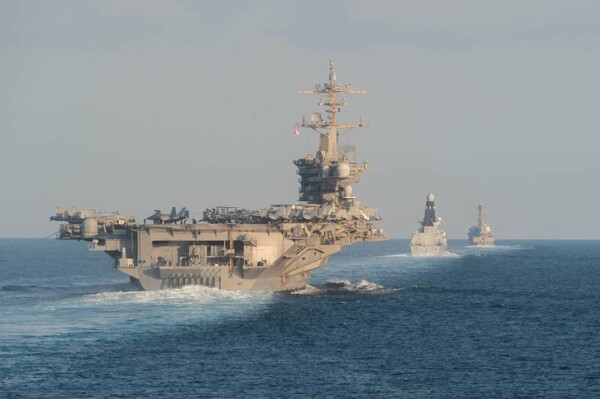
The US administration sent warships to the Caribbean, and last September, special operations forces launched a missile attack on a boat suspected of drug trafficking with 11 men on board. US President Donald Trump, without providing evidence, claimed the boat came from Venezuela and was carrying large quantities of 'fentanyl' and 'cocaine' for the 'Tren de Aragua' gang. In the same month, he told Congress that the US is engaged in an 'armed conflict' with terrorists.
US forces seized oil tankers in the Caribbean near the coast of Venezuela. When asked about the fate of the oil, Trump said, 'Well, I think we'll keep it.' It appears Trump has practically abandoned the attempt to create the illusion that his goal is limited to stopping illegal immigration and drug trafficking without seeking to overthrow Maduro. Trump accused Venezuela of 'stealing oil, land, and other assets belonging to the United States and using the proceeds to fund criminal activities.'
On the day US President Donald Trump announced what he called the end of 94% of drug smuggling operations by sea to the US and the reduction of illegal border crossings to 'zero,' he revealed a new and different justification for his escalating campaign against Venezuelan President Nicolás Maduro.
In a post on a social media platform, he stated that Venezuela 'stole oil, land, and other assets belonging to the United States and used the proceeds to fund criminal activities,' referring to confiscation operations dating back to previous decades and the violation of contracts signed with US oil companies after Caracas began nationalizing the energy sector.
He added that if the claimed American property is not returned immediately, the large US military force deployed in the Caribbean, which he said targets smuggling boats and seizes Venezuelan oil tankers, will be strengthened, warning that the shock they will receive will be unprecedented.
As the US administration continued to carry out sea attacks that have resulted in more than 100 deaths so far, and Trump announced a blockade of all sanctioned ships carrying Venezuelan oil, it became clear that the American president has practically abandoned the attempt to create the illusion that his goal is limited only to stopping illegal immigration and drug trafficking without seeking to oust Maduro.
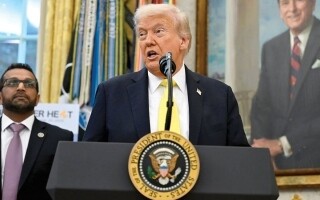
'His days are numbered,' Trump said in an interview with Politico, referring to the Venezuelan president. Later, when asked if he was leaving the door open for the possibility of war with Venezuela, he replied to NBC: 'I wouldn't rule that out.'
The US administration has described Maduro, who has been indicted in the US on drug trafficking charges since 2020, as the leader of the classified 'Cartel de los Soles' network, which is said to include high-ranking Venezuelan political and security officials, and which Washington accuses of trafficking in people and drugs to fund terrorist attacks within the United States.
One official, referring to Maduro, said: 'Ultimately, this man either has to face justice, or maybe he'll be given a chance to negotiate his exile.' In turn, White House Deputy Press Secretary Anna Kelly stated in an email response to questions: 'There is nothing to indicate that we are tightening the noose,' emphasizing that Trump has already taken decisive action to stop the flow of illegal immigrants, deport violent criminals, and defend the nation from drug terrorism, which saves countless lives across the country.