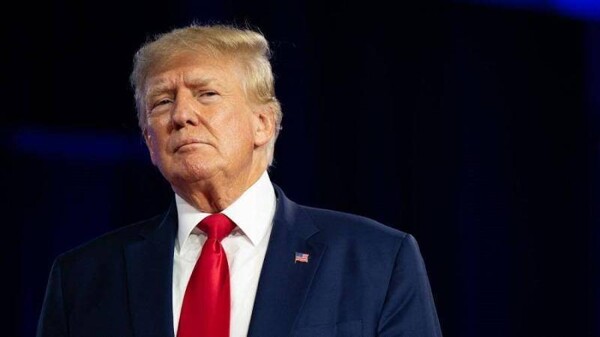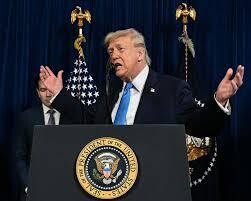
The United States has imposed a maritime blockade in the Caribbean, which will cut off Cuba's vital oil supply, which the island received as a gift from Chávez, Maduro, López Obrador, and Claudia Sheinbaum (Mexico). Thus, there was no other way to shake up the board. The merely rhetorical statements from the affected powers—Russia, Qatar, China, and Iran, as Venezuela was a beachhead for all of them in the Americas—confirm that the meeting in Anchorage, Alaska, between Trump and Vladimir Putin (and virtually Xi Jinping) was a reenactment of Yalta, where Churchill, Stalin, and Roosevelt carved up their spheres of influence. However, it is already possible to predict the worsening of the terminal socio-economic crisis hitting Cuba, a major exporter of violence to the world, which will ultimately drag the Castro regime, now represented by Miguel Díaz-Canel, into the seventh circle of hell. The enthronement in Miraflores of Delcy Rodríguez, who has already begun to purge some hierarchs, forces us to wait for the internal situation to settle before drawing conclusions, although the release of more than a thousand political prisoners remains an absolute priority, as it should be in Argentina. A decadent West, which now feigns outrage over the alleged violation of international law, shamefully remained silent while the Venezuelan people were starved, mass-expelled, tortured, and massacred, and the regime made any dialogue or negotiated exit to regain freedom and democracy impossible, savagely suppressing civil protest and stealing all elections. In any case, a period of realignment would also have to be foreseen there to recover a normality lost 67 years ago. Next month marks four years since Russia's invasion of Ukraine, and it shows no signs of ending, despite the predictions of Trump and Putin himself, who had forecast a month for the success of his 'special military operation' and continues to delay any ceasefire agreement. And like everyone, I felt a sense of disillusionment upon hearing the press conference given by the 'transparent' imperial president at his Mar-a-Lago resort in Florida, when he spoke disparagingly of María Corina Machado, the brave heroine of the Venezuelan resistance and recent Nobel Peace Prize winner. When I was able to reflect, I understood that Donald Trump was right when he said that neither she nor Edmundo González Urrutia were in a position to lead the transition from the Chavist tyranny to the longed-for democracy, a process necessarily prolonged by the need to regain the monopoly on violence, now in the hands of Diosdado Cabello and Vladimir Padrino López, and to prevent a devastating civil war, as happened after the Iraq War. In our country, the explicit support of Javier Milei for Trump's action in Venezuela will surely result in a concrete benefit for Argentina, and thank God, Luis Caputo managed to secure the funds to meet yesterday's serious external debt payment and partially cancel the swap with the US, dispelling all the ghosts of default that were darkening the horizon. If we add to this the armed conflict in Yemen, where the government (backed by Saudi Arabia), the Houthi militias (Iranian proxies), and separatist factions (pushed by the United Arab Emirates) are facing off, the entire region promises even greater instability in the immediate future. The good regional news was the European Union's first approval of the trade agreement with Mercosur after 26 years of negotiations, which will be signed in Asunción this month. At the same time, the confiscation by the US Navy on Wednesday of a strange tanker—what was its real cargo?—sailing with a painted Russian flag and the protection of its naval units, including a nuclear submarine, marks a change (or weariness?). Now it is evident that he is taking control of the streets in Iran and putting at risk the murderous regime of the Shiite ayatollahs, who are also checkmated by the war declared by the Kurdish minority in the northwest of the country. We are mistaken: it is an era. — Joseph de Maistre. Last Saturday, we were awakened by the roar of the brilliant and surgical operation with which the US extracted Nicolás Maduro and his wife, Cilia Flores, from their refuge in Caracas to bring them before the courts. The European Union, concerned about Russian aggressiveness ('a country for which constant expansion is not just an idea, but the true existential reason for our history,' said Vladislav Surkov), has already committed the presence of the armed forces of France, Germany, and the United Kingdom to guarantee the security of the territory that remains in Kiev's hands, if a peace treaty is finally signed.