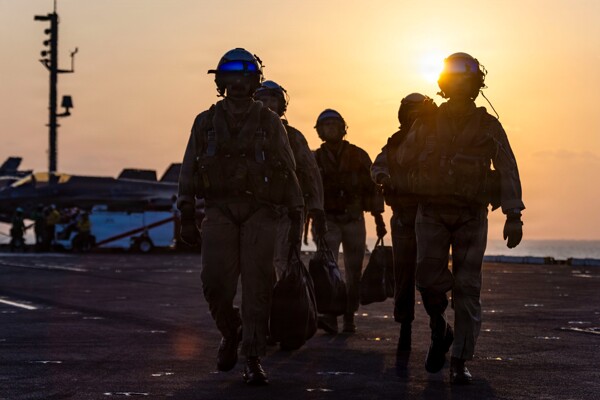
As regional governments strive for economic stability and ensure continuous development, this approach may enhance China's diplomatic standing. However, this does not mean that China will economically benefit from instability in the Middle East. On the contrary, Beijing is one of the world's largest energy importers; therefore, any disruptions in oil supplies or a significant price surge due to tensions in the Middle East could negatively impact the Chinese economy. Nevertheless, prolonged U.S. military involvement in the region over an extended period might create a strategic space that allows other international powers to expand their diplomatic influence. On the other hand, conflicts involving major military powers often provide other countries with opportunities to observe the course of war and draw lessons from it. Real-world military operations reveal crucial information regarding military tactics, modern technologies, and logistical systems used in combat. For nations seeking to study the evolution of modern warfare, observing how advanced weapon systems are utilized in actual conflicts provides insights that cannot be gained from military exercises alone. The primary challenge For the United States, the primary challenge is to ensure that actions aimed at enhancing security and stability do not create new, unintended risks that are difficult to control in the future. Lessons from history indicate that wars often produce outcomes that far exceed the initial goals for which they were fought. If a conflict with Iran leads to long-term regional instability, rising energy prices, and a reshaping of geopolitical alliances, the ultimate effect could be the weakening of American influence in the Middle East rather than its strengthening. Military strikes against Iran could cost the U.S. economy at least $10 billion, depending on the conflict's intensity and duration. Some supporters of confrontation argue that such a war could lead to weakening Iran and bolstering the United States' position; however, the larger strategic outcomes of the war might ultimately weaken American power rather than undermine the adversary's capabilities in the long run. This conflict could also lead to increasing instability and impose complex strategic trade-offs that could negatively affect America. One of the foremost concerns facing the United States is the mounting pressure that such a conflict would exert on its military resources and strategic focus. In recent years, U.S. national security strategy has increasingly focused on competition among major powers, particularly with China in the Indo-Pacific region. However, engaging in a prolonged conflict with Iran could push the U.S. back into extensive military commitments in the Middle East, a trend that American policymakers have sought to reduce over the past decade. Military resources This issue is further complicated by the current military resources available. The air defense systems, smart, and precision munitions used in a war with Iran are the same military capabilities the U.S. relies on in the event of a major conflict in other parts of the world. Thus, any limited-scale war could deplete large quantities of these advanced weapons and divert attention from broader strategic priorities. If the conflict escalates uncontrollably or drags on, the United States might find itself once again mired in managing regional security in the Middle East at the expense of its geopolitical goals in other regions. Economic consequences Alongside military challenges, significant economic consequences also emerge. According to estimates from the Penn Wharton Budget Model, an analytical initiative aimed at evaluating the financial and economic impacts of government policies, military strikes against Iran could cost the U.S. economy at least $10 billion, depending on the conflict's scale and duration. Amid escalating tensions, Beijing has emphasized the importance of diplomatic solutions and de-escalation, focusing on enhancing economic and trade cooperation. This occurs as the United States already faces a substantial federal budget deficit, and payments on the national debt, which is approaching $39 trillion, are rising. The Chinese economy Meanwhile, China has emerged as a significant economic player in the Middle East, establishing close trade and investment ties with many countries in the region. It appears that the potential for the conflict between the United States and Iran to widen could lead to a reshaping of the geopolitical landscape in the Middle East.