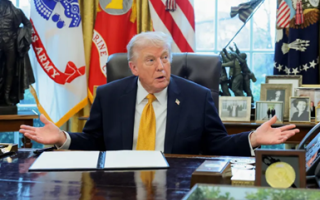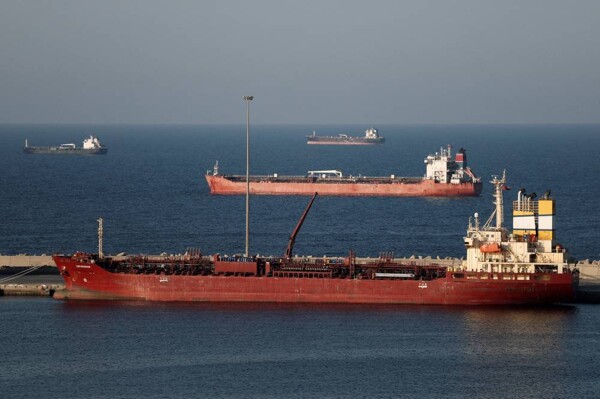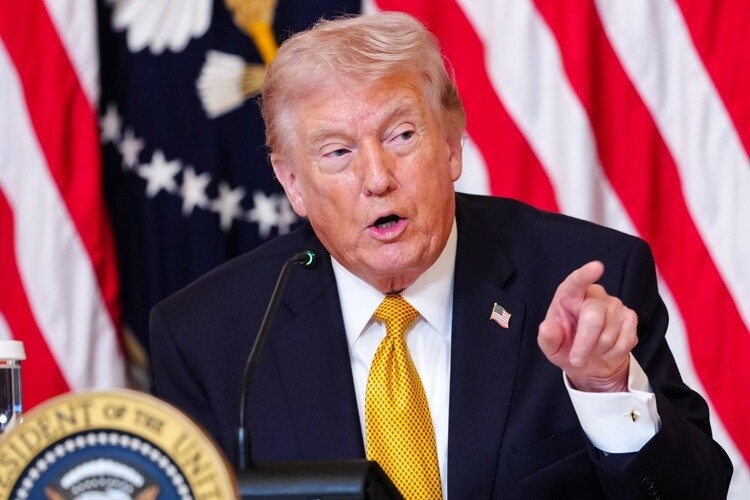
U.S. President Donald Trump criticized the lack of "enthusiasm" from his allies in response to his proposal to form a military coalition to guarantee security in the Strait of Hormuz, particularly from Europeans, who have told him that the war in Iran is not their war. "The level of enthusiasm is important to me," he declared to the press at the White House after having asked his allies over the weekend for help in reopening that key route for crude oil transit. Trump did not want to list the countries that have shown their support or those that have "disappointed" him, but he especially targeted the Atlantic Alliance: "The problem with NATO is that we will always be there for them, but they will never be there for us," he stated. Despite Trump's criticism of NATO, the only time Article 5 of the Alliance, which establishes collective defense, has been activated was after the September 11, 2001 attacks, in support of the United States. Disappointed with Starmer and confidence in Macron The U.S. president described the attitude of British Prime Minister Keir Starmer as "disappointing," asking him for help to send mine-sweeping ships, and who, according to his account, responded that he had to consult with his team. In turn, he expressed confidence that French President Emmanuel Macron will help him: "I have spoken with him. We have a very good relationship," he explained to the press. "Because of the war, I want to be here. It's not perfect, but it's France," he declared. Trump also reminded Japan, South Korea, and Germany that the U.S. maintains troops deployed in their territories, which, he said, is necessary to protect them. Reactions from Europe and other allies Meanwhile, the European Union (EU) launched a firm position from Brussels against the possibility of expanding the mandate of its naval mission in the Strait of Hormuz, urging a de-escalation in the region. "On a scale of zero to ten, I would say it's an eight," said the EU High Representative for Foreign Affairs and Security, Kaja Kallas, at a press conference following a Council of ministers meeting, and added that "Europe has no interest in an endless war." Meanwhile, German Foreign Minister Johann Wadephul stated that Berlin had no intention of participating in military operations during the conflict. The governments of the Netherlands and Greece also joined the refusal to send troops or actively participate in a military mission in Hormuz. Dutch Prime Minister Rob Jetten declared to his country's press that it would be "very difficult to launch a successful mission there in the short term." Trump postpones trip to China On this same Monday, Trump announced that due to the war in Iran, he plans to delay by a month the trip he was scheduled to make to Beijing from March 31 to April 3 to meet with his Chinese counterpart, Xi Jinping. Over the weekend, Trump had suggested the possibility of postponing the trip while waiting to learn the Asian giant's response to his Hormuz proposal, but on Monday he clarified that the delay is because he needs to be available for the offensive.