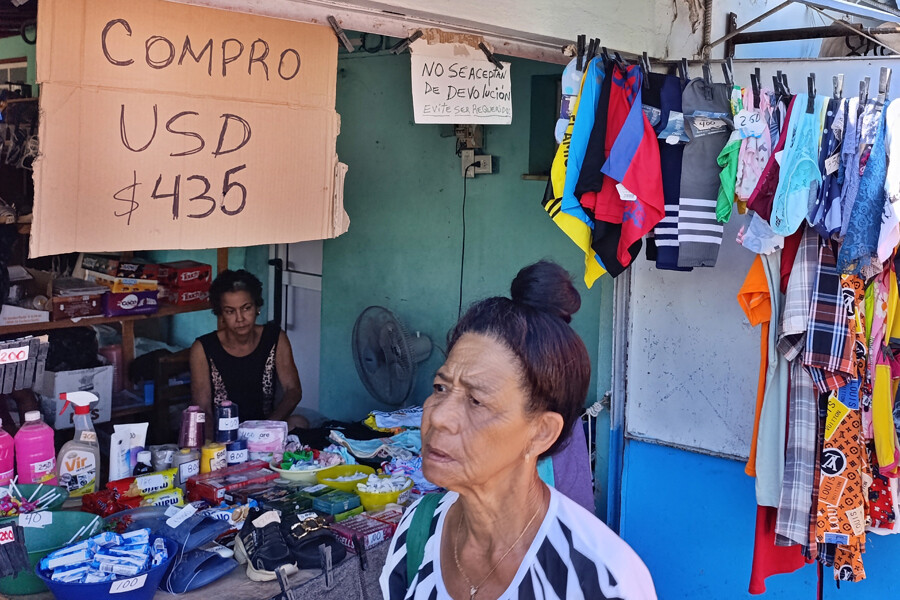
The United States is increasing economic pressure on Cuba, seeking to strangle its sources of foreign currency. The country is in a deep crisis, importing 80% of what it consumes. At the beginning of his term, President Donald Trump returned Cuba to the list of state sponsors of terrorism, which had serious financial implications. At the end of January 2025, he warned that no more Venezuelan crude oil would reach the island. "No more oil or money for Cuba!" he wrote on social media after repeatedly stating in the preceding week that Havana "is about to fall," suggesting that the removal of Venezuelan President Nicolás Maduro from the equation could be the final blow. In addition, Havana had sent Venezuela not only trainers and teachers, but also military personnel and intelligence officers.
Cuba's main sources of foreign currency are remittances, tourism, Venezuelan oil, and the export of professional services (primarily, doctors). While Cuba received 4.7 million tourists in 2018, that number has dropped to around 1.8 million by 2025. After the capture of Venezuelan President Nicolás Maduro, Washington has shut off the oil tap to Havana. According to The New York Times, Havana was largely re-exporting this oil to China to earn foreign currency. Havana and Caracas, close political allies for decades, had a bilateral agreement since 2006 under which Venezuela paid for Cuba's professional services with oil. According to official data, around 13,000 Cuban doctors were working in the South American country in mid-2025. In this way, Havana earned income and controlled foreign currency bank deposits (cash withdrawals are highly restricted). There are no official figures from the Central Bank of Cuba (BCC), but various estimates (Havana Consulting Group, Cuba Siglo XXI, Inter-American Dialogue) speak of remittances in recent years ranging from $1.8 to $2.1 billion.
Another target has been Cuba's medical missions. Havana sends teams of healthcare workers to dozens of different countries and keeps an average of 85% of their salaries, according to research by the NGO Prisoners Defenders. The U.S. State Department's 2024 Trafficking in Persons Report places Cuba's income from the export of professional services between $6 and $8 billion. According to Cuba's National Office of Statistics and Information (ONEI), the export of professional services accounted for over 40% of the island's total external sales between 2018 and 2020. Senator Marco Rubio, a staunch hardliner against Havana, has attacked these missions, labeling them "forced labor schemes," and has restricted visas for officials in Latin America, the Caribbean, and Africa who contract these brigades, as well as for Cuban diplomats who negotiate them.
Regarding tourism, the U.S. government has maintained the suspension of the ESTA visa for those who have visited Cuba, which has contributed to a decline in tourism from European Union (EU) members. However, tourism on the island has also been significantly affected since the pandemic, not only by this measure but also by the deterioration of services and the country's overall crisis. The U.S. strategy to economically suffocate Havana is not new to the Trump administration, but following the capture of Venezuelan President Nicolás Maduro, it has been given a new rhetorical and material twist. Many of the U.S. sanctions appear to be surgically designed to attack the country's main sources of foreign currency income: tourism, remittances, and the export of professional services (mainly, doctors).