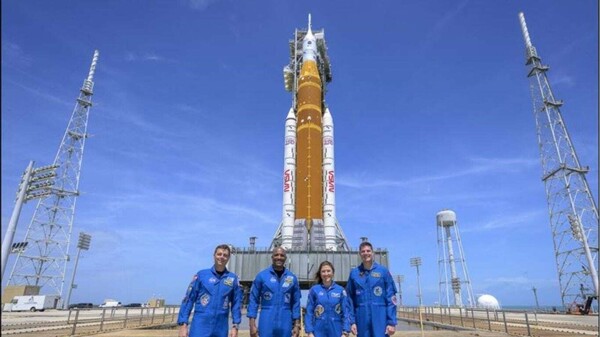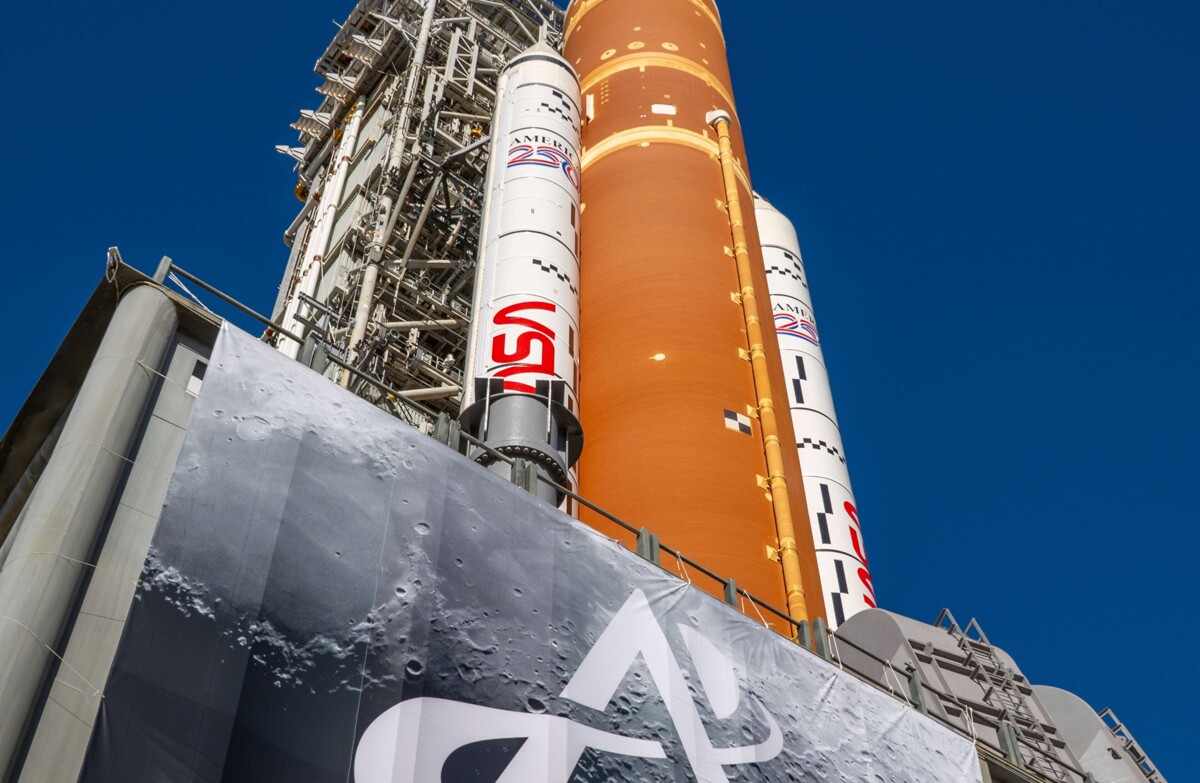
This Wednesday, April 1st, marks a turning point in modern space exploration. NASA is today launching the Artemis II mission, the first crewed flight of the program aimed at establishing a sustainable presence on Earth's moon. After decades of human absence in deep space, the Orion spacecraft, propelled by the colossal Space Launch System (SLS) rocket, is preparing to break Earth's gravity from Kennedy Space Center's Launch Pad 39B. Artemis II does not include a lunar surface landing; its fundamental purpose is to validate the life support systems and the maneuvering capabilities of the crewed Orion capsule. The four selected astronauts will perform a lunar flyby that will take them thousands of kilometers behind the far side of the moon, a 'free-return' trajectory that uses gravity to bring them back to Earth after approximately ten days of travel. This test flight is critical for the success of Artemis III, the subsequent mission that will seek physical contact with the lunar surface. During the journey, the crew will test long-range communication and the durability of the heat shield upon re-entry into the atmosphere at speeds exceeding 40,000 km/h. Space authorities recommend that observers tune into the transmission in advance, as the cryogenic fuel loading process — liquid hydrogen and oxygen — began in the early morning, representing the phase of greatest logistical risk before the final countdown. NASA has enabled comprehensive coverage that includes internal cabin cameras and external views of the SLS rocket.