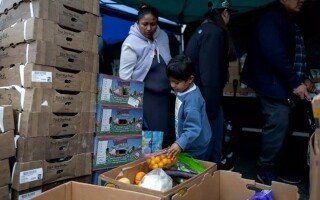
In Inglewood, Southern California, 70-year-old Gennaro Alfonso stood in the Kia Forum district, wearing a cap and a T-shirt of his favorite team, the Dodgers, with a team flag fluttering from a parked truck nearby. However, Alfonso's joy over the team's victory was short-lived. The next morning, as the clock approached 11, the elderly man had not yet eaten, and signs of sadness and fatigue were evident on his face. He raised his half-empty blue plastic coffee cup as tears streamed from his eyes, saying: "This is all I have... I don't work, my wife doesn't work, there are no jobs, the prices are extremely high."Alfonso was one of thousands of people who attended a food distribution event organized by the Los Angeles Regional Food Bank in the Kia Forum district on the first day of funding suspension for the supplemental nutrition assistance program.Federal food aid for millions of low-income Americans, including about 5.5 million people in California, was halted after the government shutdown forced food distribution offices to cease operations.Despite a federal court order requiring the U.S. Department of Agriculture to use about $5 billion in emergency funds to support the program during the shutdown, the implementation of the order was deferred until a suitable spending mechanism could be determined.Experts saw the court's decision as a temporary victory for millions of Americans who rely on food assistance, but it does not mean they will completely avoid the painful period of disruption. For this reason, local food banks rushed to prepare for a new wave of requests.California Attorney General Rob Bonta, whose office helped file a lawsuit as part of a coalition of states led by Democrats against the Trump administration over cutting food aid, stated that the court order would not immediately lead to reloading funds onto assistance cards like "CalFresh". He added: "Our estimates indicate that reloading and using the cards could take about a week, meaning people will suffer from food shortages during that period."On another new morning, dozens of volunteers from the Los Angeles food bank gathered at the main warehouse, preparing for what could be the longest government shutdown since 2018, which lasted 35 days. That day, the volunteers distributed about 5,000 food boxes to cars lined up in long queues. Each box contained enough food to prepare about 40 meals, including whole grains, fresh produce, tortillas, canned tuna, buttermilk, and frozen chicken."This is what disaster relief looks like on a large scale," said Michael Flood, CEO of the Los Angeles Food Bank. "It's all about getting as much assistance as possible to as many people as safely and quickly as possible."According to Los Angeles Mayor Karen Bass, about 600,000 food assistance recipients live in the city. In a statement last Friday, she said: "No one in Los Angeles should have to worry about going without food due to circumstances beyond their control."Meanwhile, 70-year-old volunteer Diana Jackson, who was helping load food boxes into cars near her home, explained that her son had been in line since the early hours of the morning to get help. She added: "He has seven children and was determined to come to secure food for his family."In contrast, lawyers for the U.S. Department of Agriculture argued that the $5.25 billion allocated for emergencies is primarily intended to address natural disasters and other uncontrollable crises, and using it in this context could cause subsequent financial disruptions.