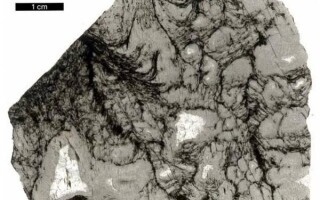
A team of scientists at the Carnegie Institution for Science has used artificial intelligence to detect the oldest traces of life on Earth, found within rocks over 3.3 billion years old. The researchers relied on machine learning techniques to analyze the faint chemical imprints left by living organisms billions of years ago, which allowed them to read the 'molecular ghosts' of early life and understand its earliest forms in a way not possible with traditional methods. This discovery opens a new window for studying the evolution of life on Earth and may guide the search for life on other planets in the future. The discovery represents a major leap in our understanding of early life evolution, as the chemical evidence pushes the date back by about 1.6 billion years compared to what was previously known. The scientists used precise chemical analysis alongside machine learning to identify the 'molecular ghosts' left by living organisms billions of years ago. The team achieved an accuracy of over 90% in recognizing the chemical fingerprints of life, even after the rocks had undergone long-term geological erosion. According to the 'Daily Mail', the results showed the presence of photosynthesis in rocks 2.52 billion years old, which is 800 million years older than previously known, helping to understand how Earth's atmosphere became rich in oxygen—a prerequisite for the development of complex life. The researchers confirmed that this technique opens new horizons for the search for life on other planets, such as Mars or the moons of Jupiter, even if fossils or intact biomolecules are not found, making it possible to study ancient environments using the 'chemical echoes' left by living organisms. Dr. Robert Hazen, one of the study's authors, said: 'This study represents a huge leap in our ability to decipher the oldest biological signatures on Earth and opens a new window for studying ancient life on other planets.' The results were published in the journal 'Proceedings of the National Academy of Sciences,' and this method is a revolution in studying the earliest forms of life on Earth, as it doubles the time period that scientists can explore through chemical biomarkers.