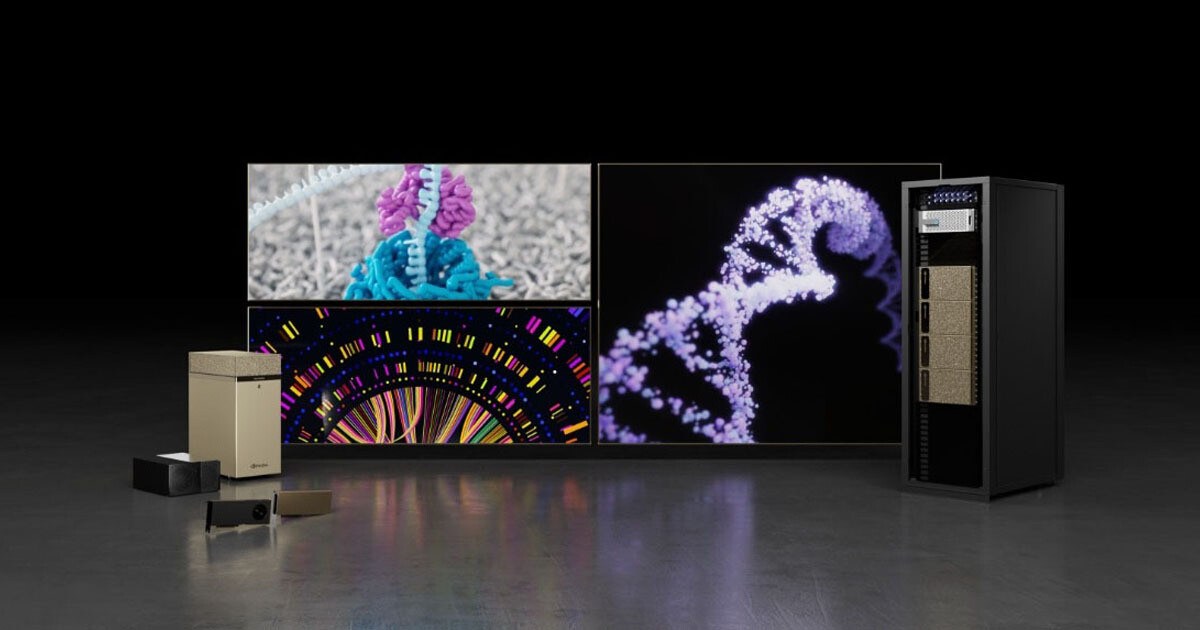
Nvidia, a leader in GPUs for AI with 80% of the market, is accelerating its pivot to healthcare, following alliances like BioNeMo for drug discovery. The resulting model will be in the public domain after validation, but the derived IP – patents in genetic therapies – will remain with Sheba and Mount Sinai, fostering spin-offs. Alexander Charney of Mount Sinai adds: “Towards a future where every sequenced genome benefits everyone.” This collaboration is no accident: Israel, with 1,000 genomic patents annually, and the U.S., home to 60% of global genomic research, converge with Nvidia's 90% share in AI chips. The collaboration, announced on November 18, deploys large language models (LLMs) of artificial intelligence to decipher the 98% of the non-coding human genome – long dismissed as 'junk DNA' – an unexplored genetic territory that harbors key regulatory mechanisms for health and disease, with a potential global impact on predictive diagnostics and personalized therapies. The project, dubbed the Genomic Large Language Model (gLLM) or Genomic Foundation Model (gFM), represents a quantum leap in computational genomics, integrating vast datasets from 15,000 Mount Sinai patient genomes – through its Million Health Discoveries program – with the clinical expertise of Sheba, which serves 4.5 million people annually and leads in digital innovation via its ARC hub (Accelerate, Redesign, Collaborate). In Israel, a biotechnology epicenter with 8,000 startups and $10 billion in exports in 2024, Sheba – which already collaborates with Google and Microsoft – sees this as a catalyst for its 'Medicine 4.0'. Initially, it will process data from Sheba's AI Center – recently inaugurated – and Mount Sinai's Charles Bronfman Institute for Personalized Medicine, with a team of 20 dedicated experts and tens of millions in shared investment. The projected impact is monumental: more precise genetic diagnostics could reduce failed clinical trials by 30%, saving pharma $50 billion annually, according to McKinsey estimates. Meanwhile, Michael Kagan, Nvidia's CTO, highlighted the role of its LLMs – similar to those powering ChatGPT – adapted to the 'biological language' of DNA: “AI will not only analyze genetic variations; by predicting therapeutic responses, it will revolutionize the prevention of cancers, heart diseases, and neurological disorders.” The focus on non-coding DNA – regions that regulate gene expression but make up 98% of the human genome sequenced in 2003 – addresses a critical gap. Critics warn of ethical risks – genetic data privacy – but the partners promise GDPR-compliant protocols. In Tel Aviv and New York, labs are abuzz: the gLLM will not just read the genome; it will narrate it, turning 'junk' into treasure for humanity. In a pact that could redefine personalized medicine and accelerate advances against chronic diseases, tech titan Nvidia has forged a three-year tripartite alliance with Sheba Medical Center in Israel – ranked as the number one hospital in the Middle East and among the top 10 in the world by Newsweek – and the Icahn School of Medicine at Mount Sinai Hospital in New York. Eric J. Nestler, dean of the Icahn School, emphasized the “power of global collaboration”: “We are unlocking the unexplored genome for advances that will benefit patients worldwide.” Leaders like Professor Gidi Rechavi of Sheba's Cancer Research Center emphasize: “Decoding this variability is the key to future therapies.” Recent studies, such as the 2024 ENCODE Project, reveal that these sequences influence aging, immunity, and pathogen susceptibility, but their complexity has frustrated conventional analysis. In a post-pandemic world, where CRISPR and gene therapies are worth $20 billion, this initiative could shorten the development of cures for Alzheimer's or rare cancers by years. Nvidia, with its supercomputing BioNeMo architecture and platforms like DGX Cloud, provides the brute force to train algorithms to process terabytes of DNA sequences, revealing patterns invisible to traditional methods. “We have massive data, and now we will teach the artificial brain to read it,” declared Professor Yitzhak Kreiss, director general of Sheba, at the virtual signing ceremony. The gLLM of this alliance will employ machine learning to map regulatory functions, identifying variants that cause rare diseases or respond to drugs like the mRNA COVID vaccines. “This initiative is not just cutting-edge in health; it is an economic and scientific transformation that will accelerate discoveries for billions.” Mount Sinai, with its Windreich Department of AI and Human Health, will integrate findings into its network of 7 hospitals, benefiting 2 million New Yorkers.