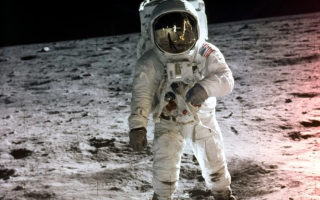
NASA and space experts have revealed that if an astronaut were to die on the lunar surface, the body would not decompose as it does on Earth but would instead become a kind of 'lunar mummy'. Studies and simulations conducted by NASA show that bodies in space are exposed to harsh conditions that prevent natural decay. Former commander of the International Space Station (ISS) astronaut Chris Hadfield explained that NASA performs 'death simulations' to train astronauts for such scenarios. Hadfield said: 'If an astronaut dies during an extravehicular activity, I'll first bring them into the airlock to equalize pressure and keep them in the pressurized spacesuit, because the body decomposes faster inside the suit, and we don't want the smell of decay or gases from the body to spread.' He added that the body is stored in a cold place on the station to minimize any health risks. In the event of a death aboard the ISS, options for handling the body could include returning it to Earth, jettisoning it into a disposal trajectory, or allowing it to enter the atmosphere to burn up. Decisions depend on the astronauts' own wishes, who may provide advance instructions to NASA, according to iflscience. For long-duration missions, such as trips to Mars, space agencies might use advanced techniques like freezing the body outside the spacecraft and then shattering it with a robotic arm to reduce weight and preserve the environmental safety on board. On the lunar surface, the situation is more complex. Death during a lunar day could initiate internal decomposition by bacteria, but the water in the body would quickly evaporate due to the lunar vacuum, halting decay. With the onset of the long lunar night, which lasts 14 Earth days, the body would completely freeze, halting bacterial activity and partially preserving it as a 'lunar mummy'. Additionally, the body is exposed to space radiation, which could lead to bone disintegration over the long term, while temperature fluctuations between 127°C during the day and -173°C at night could cause the body to crack due to constant expansion and contraction. If the body is buried under the lunar surface, it will remain preserved in low temperatures for many years. The study concludes that death in space poses a major logistical challenge for space agencies, and everyone hopes that no such tragedy will occur far from Earth.