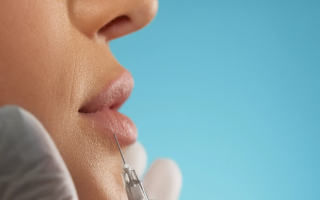
Beauty experts have warned that injectable fillers used in cosmetic procedures can cause blockages in major blood vessels, which may have harmful health complications.
At this week's annual meeting of the Radiological Society of North America in Chicago, doctors found that ultrasound technology can detect these dangerous blockages early enough to guide treatment and help prevent permanent damage.
Researchers analyzed data from 100 patients from six different sites who experienced vascular complications after hyaluronic acid filler injections. All data was collected between May 2022 and April 2025. The researchers found that ultrasound successfully detected vascular occlusion, a blockage in a blood vessel that stops normal blood flow.
If left untreated, this condition can cause pain, skin damage, and scarring. In severe cases, complications can lead to vision loss or stroke.
Dr. Rosa Maria Silveira Segrist, the lead researcher, said: «Doppler ultrasound helps doctors see exactly where the filler is, how blood is flowing in real time, and whether the blood vessels have been affected after a cosmetic procedure.» She added: «The physical exam remains extremely important, but ultrasound adds extra information that makes the assessment safer and the treatment more precise».
The nasal area was identified as the most at-risk area, as the lateral nasal artery runs along the side of the nose and supplies blood to the larger arteries leading to the eye and brain.
Dr. Anthony Perley, a board-certified plastic surgeon in New Jersey, said: «Vascular occlusion after a filler injection can lead to devastating outcomes, including skin necrosis, tissue loss, and in the worst cases, blindness and even stroke, because once one of the major arteries—for example, the one that feeds the retina or the skin—is blocked by a filler or a blood clot, the damage can be irreversible».
According to Dr. Samuel Golbanyan, a board-certified plastic surgeon in Beverly Hills, when turning to an experienced and licensed specialist who uses appropriate techniques, the risk of a blood vessel blockage should be less than 1%. He added: «However, if the procedures are performed by an untrained person or using the wrong needles and techniques, the complication rate can be much higher, ranging from 10% to 20%, which is completely unacceptable».