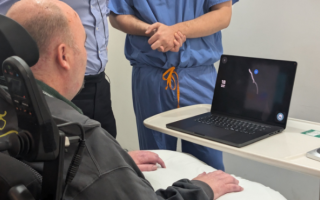
Elon Musk announced that his company, Neuralink, will begin mass production of its brain chips in 2026. This announcement was made in a post on the X platform. According to a Fox News report, the goal of the Neuralink chip is to link the brain with a computer by reading and translating the electrical signals from neurons into digital commands. This will allow users to control devices or restore lost functions using the power of their minds. Electrodes are implanted near the neurons in the brain to 'monitor motor efforts,' which enables the chip to 'decode the information represented by those cells.' The company reported that as of last September, 12 people worldwide with severe paralysis have received Neuralink implants and are using them to control digital and physical tools through thought. In April of last year, Brad Smith from Arizona, who has amyotrophic lateral sclerosis (ALS) and is completely paralyzed, became the third person to receive the chip. He was able to write using his brain, as he shared in a video posted on X. Smith wrote, 'I am typing this with my brain. This is my primary means of communication.' The company also began human trials for the brain chip implant in 2024, after the U.S. Food and Drug Administration (FDA) addressed safety concerns that had led to the initial rejection of its application in 2022. The chip is described as fully implantable and cosmetically invisible, with a thickness of no more than 1.75 inches. Musk stated that by 2026, the company will transition to a simplified and largely automated surgical procedure, where the device's threads will pass through the 'dura mater' without the need for its removal, describing it as a 'major advancement.'