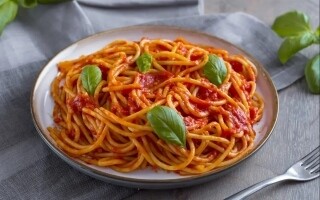
A group of experts has confirmed that eating leftover pasta from the previous day is better for blood sugar levels than eating fresh pasta. This came after renowned chef Giada De Laurentis highlighted this tip in a video she recently posted on Instagram, where she shared a 'golden tip' with her followers, suggesting that eating pasta the next day might be easier on the stomach. De Laurentis said in the video: 'Leftover pasta is the best solution.' Experts confirmed to the American Fox News network that this advice is backed by research. Ashley Kitchens, a plant-based nutrition specialist from North Carolina, said: 'When you cook pasta, let it cool, and then reheat it in the microwave, some of the digestible starches turn into what is called resistant starch, a type of starch that the body does not digest easily, which reduces the amount of glucose that reaches the bloodstream.' Kitchens added that resistant starch acts like fiber; it feeds beneficial gut bacteria instead of quickly turning into sugar. Nutrition experts at the Wexner Medical Center at Ohio State University confirmed Kitchens' statements, saying that resistant starch is formed through a process scientifically known as 'starch retrogradation.' However, after cooling it in the refrigerator for 24 hours or more, some of these starches reorganize themselves into a structure that the body cannot break down completely. As a result, reheated pasta after cooling provides fewer digestible calories and leads to a smaller post-meal spike in blood sugar, according to experts. According to a report published by the Wexner Medical Center, resistant starch contains about half the calories per gram of regular starch and travels to the colon where it feeds the beneficial bacteria in the gut. Studies indicate that this effect is real, but it varies from person to person, especially for diabetics. A study conducted at the University of Surrey in England also showed a decrease in blood sugar and insulin levels after eating pasta that was reheated after cooling, compared to fresh pasta. However, experts warned against considering it a 'magic trick,' emphasizing that portion size remains a critical factor. 'It's not a guaranteed trick, and its effect varies from person to person,' said Lori Wright, an associate professor at the University of South Florida's College of Public Health. She added: 'This method may lessen or slightly delay the rise in blood glucose, but it does not completely eliminate the effect of pasta on blood sugar.' Regarding portion size, Kitchens pointed out that 'only a portion of the starches turns into resistant starch; so if you are eating large amounts of pasta, this trick may not be very helpful.' Experts agree that reheating pasta may offer a slight metabolic benefit, but balanced meals, fiber intake, and portion control remain the most important factors. They also confirmed that the same effect applies to other starchy foods like rice and potatoes, while it may occur to varying degrees in bread as well. When pasta is cooked, its starch turns into a gel-like state, which makes it easier to digest.