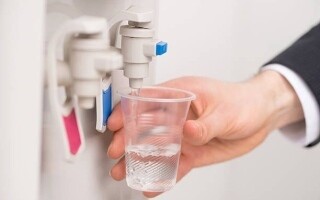
Water coolers and dispensers are essential devices in homes and workplaces, providing convenience and quick access to cold or hot drinking water. However, a recent study warns that water coolers and dispensers widely used in offices and public places can create a fertile environment for bacteria to thrive, despite the common belief that they are safer than tap water. According to the Daily Mail, researchers from Loma Linda University in California conducted an analytical review of data from 70 studies carried out over the past two decades in five countries, including the US and the UK. They concluded that water dispensers often contain bacteria levels exceeding those found in the tap water they supply. The researchers analyzed bacterial contamination in various types of water dispensers, including those directly connected to the tap water network and those using large water bottles. The results showed that the surfaces of these devices can become contaminated with biofilms, a slimy, protective layer produced by microorganisms, which allows bacteria to survive and multiply inside water tanks, pipes, and nozzles. The study revealed that bacterial contamination is not limited to water coolers but also extends to beverage vending machines, where bacterial growth was recorded just a few days after some devices were disinfected. Among the bacteria detected were coliforms, bacteria associated with human and animal waste, which can increase the risk of gastrointestinal illnesses like nausea and vomiting, and in rare cases, the infection can be fatal. Dr. Ryan Sinclair, an environmental microbiology expert and a co-author of the study, explained that the water filtration process in these devices removes residual chlorine, creating an environment conducive to bacterial growth, and emphasized the need for regular pipe cleaning and filter replacement. Unlike tap water, which typically contains trace amounts of chlorine that kill microbes, water coolers may allow water to pass without disinfectants, enabling bacteria to multiply, especially on the wet surfaces of nozzles and distribution points. Experts warn that neglecting to clean the devices or replace filters regularly can turn these filters into a breeding ground for bacteria instead of their intended protective role. The researchers noted that the aim of the study is to raise awareness of potential health risks associated with water dispensers and coolers and to call for compliance with regular maintenance and cleaning procedures. Led by Dr. Thomas Hale, a water quality expert at Crafton Hills College in California, the research team recommended cleaning water distribution devices every two to four weeks, or weekly in case of heavy use.