A small wireless implant offers new hope for people who have lost their sight due to age-related macular degeneration. In a large-scale international clinical trial, over 80% of participants regained good central vision, with many able to read letters and even words again after years of decline.
The device replaces damaged light-sensitive cells in the retina with a tiny 2×2 mm implant that converts light into electrical signals, restoring communication between the eye and the brain. Overall, vision improved in 81% of participants by at least 10 letters.
Sahel, the lead author of the study and head of the ophthalmology department at the University of Pittsburgh School of Medicine, said: "This is the first time any attempt to restore vision has achieved such results in such a large number of patients." Additionally, 27 participants (84%) reported using the artificial vision provided by the implant at home to read numbers or words.
On average, patients' vision improved by 25 letters on a standard eye chart, equivalent to about five lines. More than 80% of patients could read letters and words, some even entire pages of a book. "This is an achievement we wouldn't have dreamed of when we began this journey with Daniel Palanker 15 years ago."
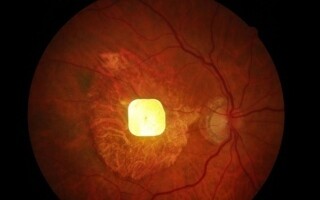
As age-related macular degeneration progresses, the central field of vision becomes blurry due to permanent damage to light-sensitive retinal cells. This multi-center international clinical trial was led by Dr. José-Alan Sahel, director of the Institute of Vision at UPMC; Dr. Daniel Palanker, professor of ophthalmology at Stanford University; and Dr. Frank Holz, professor of ophthalmology at the University of Bonn, Germany.
Of the 32 participants who completed one year of follow-up, 26 (81%) showed a significant improvement in visual acuity.