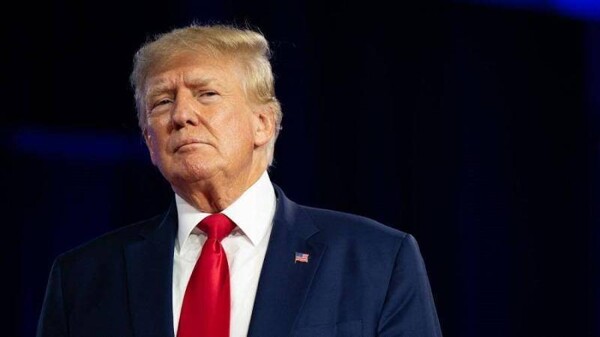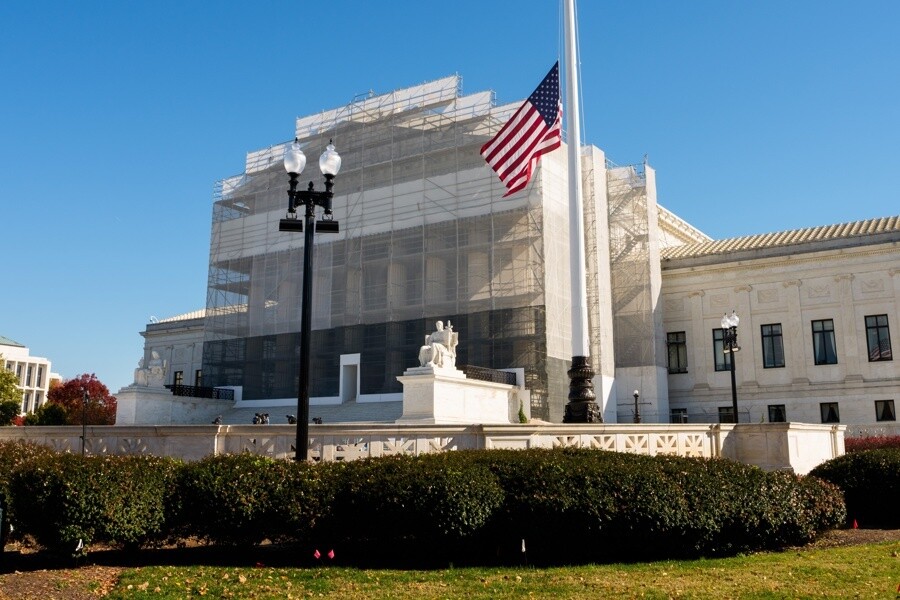
Washington, Nov 5 (EFE). - The U.S. Supreme Court on Wednesday expressed skepticism about President Donald Trump's power to impose tariffs on virtually all territories of the world, suggesting that his use of an emergency law to justify the levies may have been incorrect.
The conservative-majority court held a hearing to determine whether the International Emergency Economic Powers Act (IEEPA), which grants presidents the power to address a 'threat' during a 'national emergency,' is applicable in this case regarding the tariff hikes announced since April.
From the start of the session, the justices raised doubts about the legality of his tariff policy, including conservative judges who typically align with the Republican's stance, and whether the power to impose tariffs rests with Congress under the Constitution.
A ruling against Trump's tariff policy, even a partial one, would be a significant blow to the president, who has built his economic plan and even diplomatic relations based on these tariffs.
John Sauer, the solicitor general representing the administration's position, attempted to defend the need for these tariffs due to an economic emergency but denied that an economic benefit was sought.
However, Trump has on multiple occasions highlighted the revenue he would generate from the tariffs.
Chief Justice John Roberts, a conservative judge who was one of the most pointed in his questioning of the government's lawyer, stated that imposing tariffs has always been a congressional power and granting this authority to the president 'neutralizes' the separation of powers.
Justices like progressive Sonia Sotomayor maintained that tariffs are part of fiscal policy, which, as she argued, falls under Congress's jurisdiction.
A key moment came when the lawyer for a group of affected companies, one of the plaintiffs, stated that conservative Justice Neil Gorsuch, nominated by Trump in 2017, had 'hit the nail on the head' with one of his arguments questioning the administration's actions.
Several justices were convinced by the argument that tariffs are intended to mitigate an emergency and especially by the fact that many countries received 'reciprocal' tariffs, as Trump dubbed them.
The case reached the Supreme Court after lower courts and a federal appeals court ruled that the president had overstepped his authority in determining his tariff package.
The challenge was brought by a group of 12 Democratic prosecutors, represented by the Oregon attorney general, and a group of companies represented by lawyer Neal Katyal, who served as U.S. solicitor general during part of Barack Obama's presidency.
Beyond doubts about the president's policy, some justices also expressed concern about potential issues that could arise if the court rules against him, such as possible refunds of tariffs already paid by companies or the implications of limiting presidential power for future emergencies.
The Supreme Court is expected to issue a ruling by the end of June, as the political term concludes, though it is possible the decision could come sooner given the case's significance.
Photo EFE