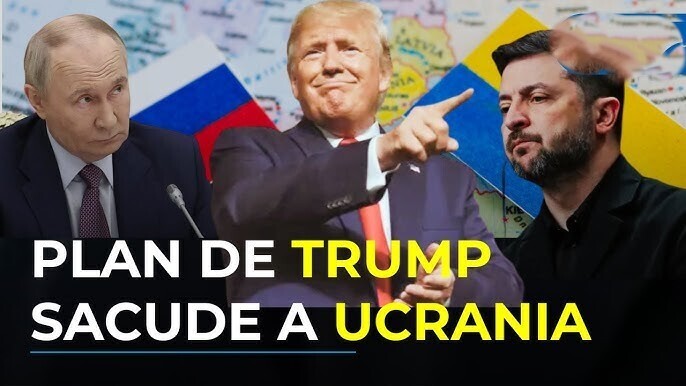
The detection of a syntactic construction typical of another language in a diplomatic English text opens a window to trace responsibilities and strategies of persuasion. The plan is released at a moment of maximum vulnerability for Ukraine, as Russia intensifies its bombings in the west of the country and Ukrainian forces face growing challenges on the front. The indications that certain phrases were imported or adapted from Russian open the possibility that the text is largely a product of Moscow. This revelation not only affects the substance of the agreement—which revolves around freezing front lines, recognizing annexations, and limiting Ukrainian autonomy—but also the perception of impartiality in the mediation process. This linguistic anomaly, along with other unusual expressions in diplomatic English, such as “all ambiguities of the last thirty years will be considered resolved,” indicate a possible origin in Moscow or at least a strong Russian influence in its drafting. The draft, presented by U.S. and Russian officials—including Kirill Dmitriev, head of the Russian Direct Investment Fund, and U.S. envoy Steve Witkoff—proposes significant concessions for Ukraine: recognition of Crimea, Luhansk, and Donetsk as Russian territories, limiting the Ukrainian Armed Forces to 600,000 personnel, and a future ban on Ukraine joining NATO. The content has been rejected by Kyiv as unacceptable. Was it a genuine U.S. initiative, or an attempt to legitimize Russian demands under the circumstantial diplomatic umbrella of Washington? This feeds the perception that the plan clearly favors Russia's interests and weakens Ukraine's position in the negotiations. Experts in political linguistics warn that these “translation traits” are not harmless: they can reveal the real authorship, the intermediaries used, and the intention of the dominant party. For Ukraine and its allies, the writing style becomes a warning sign: if the language favors Moscow, the terms of the compromise likely will too. Ultimately, what began as a peace draft is taking the form of a linguistic mirror: in its phrases are reflected not only diverse worlds—Russian and English—but opposing geopolitical interests. In the diplomatic context, a draft with “Russian traits” lends credibility to the hypothesis that it was Moscow that wrote the fine print, and that Washington is merely promoting it as its own. Washington / Kyiv, November 22, 2025 – A 28-point draft promoted by the United States as a peace framework for the war in Ukraine has caused alarm not only for its content but also for its style and wording, which linguistic analysis experts link to literal translations from Russian. The mediator's credibility is called into question when its proposal appears to contain traits of the opposing party's text. The leak of the draft has alarmed European allies, who believe it would be a de facto surrender to Russian demands without sufficient consultation with Kyiv's partners. Although the document is in “draft” status and has not been officially ratified by Washington or Kyiv, its editorial style and content have raised questions about who wrote it and for what purpose. The literal translation, the unusual use of diplomatic English, and the alignment of the content with Moscow's demands form a document whose ambiguity goes beyond its words: it is also a signal of the real power behind the negotiation. In a statement, President Volodymyr Zelenskyy warned that Ukraine will not “cede its dignity” and that an agreement based on losing territory is equivalent to the disappearance of its sovereignty. Why does the style and origin of the text matter? Sources from The Guardian point out that expressions such as “it is expected that Russia will not invade neighboring countries” or the repeated use of “shall” and “consagrar” (engl. “to enshrine”) suggest that parts of the text were originally written in Russian or reviewed by native speakers of that language. The third point of the document literally reads: “It is expected that Russia will not invade its neighbours and NATO will not expand further.” According to language analysts, the construction “it is expected that” is atypical in diplomatic English, but it coincides with the Russian structure “ожидается, что” (it is expected that).