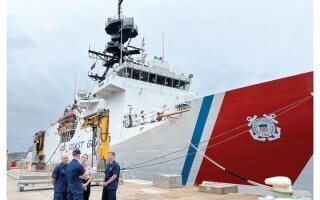
The U.S. Coast Guard performs critical missions to address the complexities of the current security environment, from combating drug trafficking in the Caribbean and rescuing sailors off the coast of Alaska to ensuring freedom of navigation in the South China Sea. However, the Coast Guard remains the only branch of the U.S. military without a dedicated civilian secretary to advocate for its needs. President Donald Trump and Congress can end this «unusual» situation and provide the Coast Guard with the tools it needs to succeed.
Many Missions The missions of the Coast Guard are numerous, vast, and indispensable, and they are continuously expanding. This service is responsible for securing 95,000 miles of U.S. coastline and 3.4 million square nautical miles of the United States' Exclusive Economic Zone — responsibilities that far exceed its current resources. America's maritime interests extend far beyond its shores. In the Arctic, where melting ice opens new shipping lanes and resource extraction routes, the Coast Guard asserts U.S. sovereignty against Russian and Chinese encroachments. Similarly, in Antarctica, the Coast Guard's heavy icebreakers enable the annual resupply of McMurdo Station, supporting American research under the Antarctic Treaty while navigating through ice up to 10 feet thick.
The nearby Caribbean region requires constant vigilance. The Coast Guard is responsible for preventing the smuggling of drugs by sea, intercepting tons of narcotics annually before they reach American streets. In the realm of national defense, the U.S. Coast Guard secures ports, waterways, and coastal interfaces, preventing terrorism and sabotage in more than 300 U.S. ports while deterring illegal immigration. Add to that environmental protection, search and rescue operations, and aids to navigation, and it becomes undeniable that the «Coast Guard performs multi-faceted missions unlike any other».
Resource Shortfalls In contrast, larger forces often suffer from isolated missions and bloated overheads. Personnel gaps lead to staffing shortages at stations, and recruitment targets are consistently unmet. A backlog of $7 billion in coastal infrastructure — up from $2.6 billion in 2019 — is leading to the deterioration of Coast Guard facilities and equipment. This military branch's budget does not allow for long-term planning, which exacerbates acquisition problems by increasing program costs.
Unlike other services or the Navy, which exert pressure through dedicated secretaries to secure additional funds, the Coast Guard commandant must compete within the Department of Homeland Security's $100 billion budget and often loses out to other priorities. Having a secretary for this vital branch would solidify the Coast Guard's place in the Cabinet, similar to how the service secretaries do to gain additional support.
A Civilian Leader Furthermore, a civilian leader could provide interagency coordination and oversight for the long-term strategic reforms needed to address the systemic issues affecting this resource-strained service. Creating a Coast Guard secretary position would not only affirm this service's parity with other military branches but also help provide the resources the Coast Guard desperately needs.
While efficiency has always been the hallmark of this branch, which achieves a big impact for every dollar, there are practical limits to what the Coast Guard can do with its current resources and the size and scope of its mission set. With a fiscal year 2025 budget of only $13.8 billion, the U.S. Coast Guard is operating at the limits of its financial capacity as the demand for its services grows. Creating a separate department for the Coast Guard would amplify its voice in «budget battles» on Capitol Hill and within the White House, addressing the chronic problems that needlessly constrain this vital service.
Source: "The National Interest".