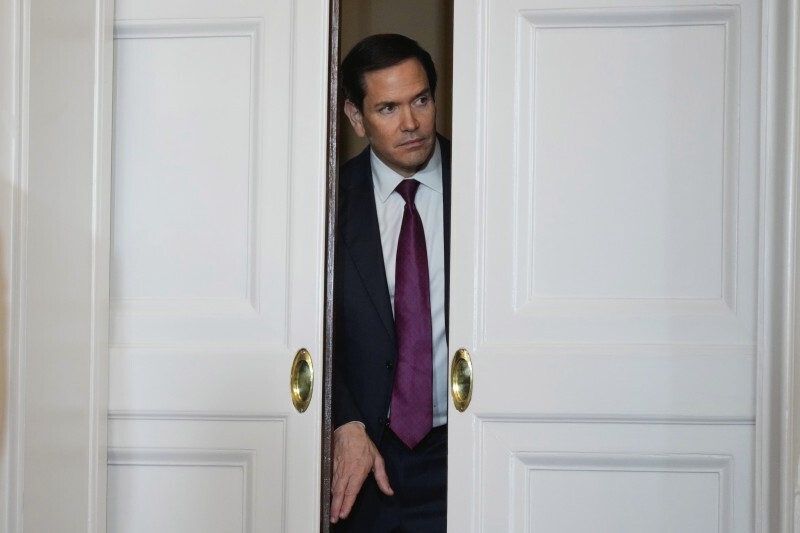
The Trump administration is holding firm on its Venezuela stance, presenting two main options: the chavismo and engagement with Washington. Diplomats in Washington explain that Trump is convinced the Venezuelan opposition is unable to provide governance or secure the loyalty of the Bolivarian Armed Forces. These forces control crucial sectors of the Venezuelan economy and boast over 500 generals, the highest number of any army in the world. From Washington's perspective, elevating Machado would mean a long-term military occupation, similar to Afghanistan or Iraq. The opposition leader hopes the international community will grant her the role Trump has refused: to be a governance option for a post-Maduro Venezuela. This is her primary challenge. Mexico is also not ruled out as a potential destination. Machado will embark on an agenda aimed at giving Trump the final push in his military campaign against Maduro. This aligns perfectly with the ideology of the Vice President, which Secretary of Security Kriti Noem echoed on Thursday when she stated that Mexican cartels pose a danger to the United States. Polls also do not offer a strong incentive for deep involvement in Venezuela. According to sources at the State Department, there was a specific contact where the Venezuelan leader requested all possible support to encourage Trump to consider the opposition in his power struggle with Nicolás Maduro's regime. The request makes sense because, for now, the White House's attitude toward Machado is frosty. Trump did not celebrate her escape nor did he send any of his closest staff to Norway to greet her. In the arena of international politics, the Secretary of State appears to be behind Vice President JD Vance, as reflected in the National Security Strategy document released last week. That text does not present China and Russia as the most serious threats and suggests Europe should defend itself with minimal NATO support. This week, a review from the Ronald Reagan Library revealed that Venezuela is not listed as a national security priority. And without governance, there can be no business climate for Venezuela's oil industry, where Chevron holds a vital position. Given this scenario, introducing Machado into the White House's preferences looks like a titanic task for Rubio. Furthermore, the U.S. government's role in Machado's escape seemed minimal and vague, which is why there has been little communication on the matter. In fact, in Oslo, only Republican Congresswoman María Elvira Salazar was present, and she has strong differences with the White House. Machado will begin a series of contacts in the European Union next week as a precursor to a tour of the United States and Latin America. María Corina Machado contacted Secretary of State Marco Rubio shortly after arriving in Oslo to meet with her family. Machado has sent signals of conciliation to Trump, dedicated the Nobel Prize to him, and went as far as to say that Joe Biden's 2020 victory was fraudulent. The electorate's fears remain, more or less, the recurring ones: China, Russia, and North Korea.