The United States is seeking to enhance the deterrent capabilities of Southeast Asian nations to maintain freedom of navigation and counter activities destabilizing the South China Sea. Washington has long collaborated with the Philippines, its treaty ally since 1951, and Vietnam has become an increasingly important partner, with the U.S. upgrading Vietnam's status to a 'Comprehensive Strategic Partner' in 2023. The U.S. is also expanding security cooperation with Cambodia, despite its long-standing, close ties with China.
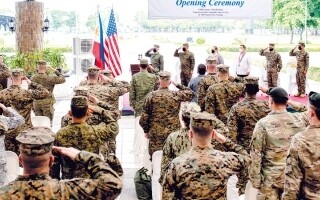
In November, the U.S. and the Philippines announced plans to establish a joint task force to deter Beijing in the South China Sea. This first-of-its-kind task force will allow U.S. and Philippine forces to respond more quickly when Chinese vessels enter disputed waters around the Philippines. The U.S. Pacific Fleet stated the task force will include 60 specialists and be led by a senior officer, and will not include new combat forces, offensive operations, or permanent military bases.
While the formation of the joint task force likely aims to send a message to Manila about U.S. commitment, the Philippines is also preparing for a scenario where allies may not be able to provide immediate assistance. In late 2024, the Philippine Armed Forces unveiled a new 'Unilateral Defense Plan.' Although Manila expects assistance from allies, it recognizes that help might take a month or more to arrive.
The newly established Strategic Command, responsible for the Philippines' exclusive economic zone, occupied territories in the South China Sea, and airspace, could become the primary command unit for combat forces during wartime.
Diplomatically, the Philippines aims to leverage its 2026 chairmanship of the Association of Southeast Asian Nations (ASEAN) to push for a legally binding code of conduct between ASEAN members and China. This would codify rules of behavior in the South China Sea and reduce the risk of maritime clashes. ASEAN and China agreed in 2002 to create such a code of conduct, but 23 years later, the agreement remains unratified. Despite Manila's interest, it is unlikely Beijing will agree to any binding commitments in 2026.
The U.S. is also interested in security cooperation with another claimant in the South China Sea, Vietnam, but progress has been slower. A visit by U.S. Defense Secretary Pete Hegseth to Vietnam in early November did not result in any announced weapons deals. For historical reasons, Russia remains a primary source of military supplies for Vietnam. Despite Vietnam's stated desire to diversify its military equipment sources and the U.S. lifting its arms embargo on Vietnam in 2016, no major U.S. systems have been sold to date.
Vietnam's continued reliance on Russian arms reflects several factors, including bureaucratic hurdles. Other factors that could slow Vietnam's purchases of major U.S. systems include concerns about provoking China's anger and, possibly, questions in Hanoi about U.S. reliability.
The U.S. has finally lifted its arms embargo on Cambodia, which had been in place since 2021. The decision came after the resumption of defense cooperation and cross-border crime fighting. The resumption of joint defense exercises between the two countries, known as 'Angkor Sentinel,' which had been paused since 2017, was also announced. The lifting of the embargo also comes amid improving relations between Washington and Phnom Penh, a small but regionally significant ally to China. Cooperation is strengthening in areas such as transnational crime, and Cambodian officers are being offered seats at U.S. military academies like West Point and the Air Force Academy.
U.S. Secretary of State Marco Rubio previously confirmed the official end of the embargo in a Federal Register notice, stating that future arms sales would be reviewed on a case-by-case basis.