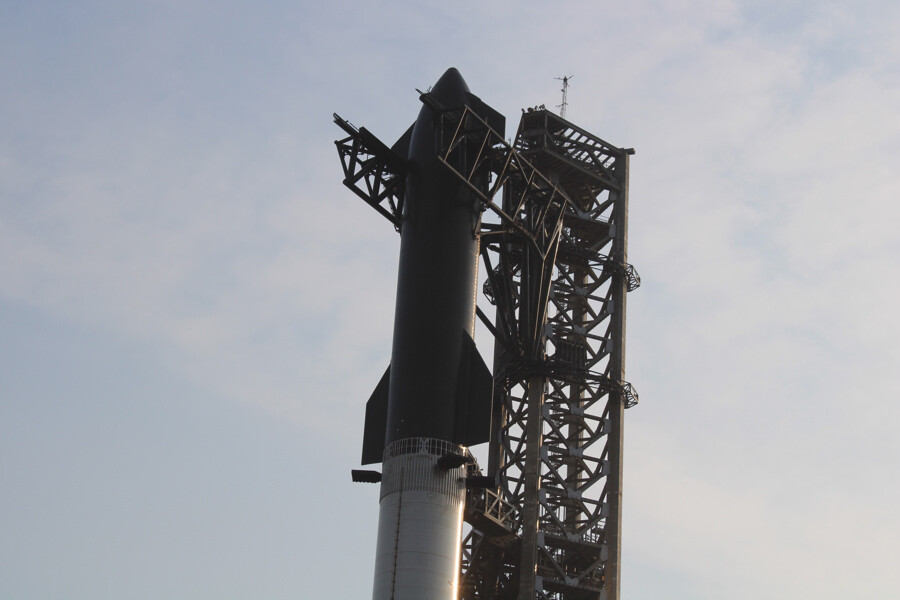
The United States and China lead a new race to the Moon, with India and Japan seeking to join. However, the competition is no longer limited to two nations: India and Japan also made significant space advances this year, hoping to reach Earth's satellite in the coming decades. The arrival of Donald Trump at the White House in January generated uncertainty and a shift in focus for the U.S. space program, which is now aimed at reducing NASA's budget and increasing its reliance on private companies. Returning to the Moon is a priority for the Republican government, which expressed public frustration last October over delays from SpaceX, a key company in the Artemis III mission, with which the U.S. seeks to return to the satellite in 2027 before China and establish a sustained presence there. Internally, SpaceX's competition is focused on Jeff Bezos's Blue Origin, which last month successfully recovered the first stage of its New Glenn rocket and has positioned itself as the main alternative to the company founded by Elon Musk. The U.S. roadmap for reaching the Moon will face a major chapter next February, when NASA hopes to launch the Artemis II mission into space, which will mark the return of astronauts to lunar orbit after more than five decades, although the spacecraft will not land on the Moon. China aims to reach the Moon before 2030 China maintained its goal of taking 'taikonauts' to the Moon before 2030, a milestone for which it accelerated technical preparations, in which establishing a research base on the satellite's south pole is a fundamental part. To support this goal, Chinese space authorities investigated pioneering technologies such as bricks made from materials created in a laboratory to mimic lunar regolith, seeking to develop in-situ construction methods. Additionally, the Asian giant launched the Tianwen-2 mission, which will become the first Chinese spacecraft to collect samples from an asteroid, specifically Kamo'oalewa, before heading to study comet 311P. However, the Chinese space program faced an anomaly with the Shenzhou-20 at the end of the year, forcing the Tiangong station crew to return in a backup spacecraft and to send Shenzhou-22 without astronauts to restore the rotation cycle. India's first astronaut at the ISS India had a year marked by the success of its SpaDeX docking experiment, the milestone of its hundredth launch, and the first Indian astronaut's passage through the International Space Station (ISS). The Indian Space Research Organisation (ISRO) kicked off the year with the success of its SpaDeX mission in January, joining a select group of nations capable of docking spacecraft in space, after the United States, Russia, and China, and that same month conducted its hundredth launch since the agency's creation in 1969. In July, Captain Shubhanshu Shukla became the first Indian astronaut to visit the ISS when he traveled aboard a spacecraft from the U.S. company Axiom Space. India now faces a decade of increasingly ambitious missions, with the launch of its first crewed space mission scheduled for no earlier than 2027, the development of its own space station in 2035, and the sending of an astronaut to the Moon by 2040. Japan prepares a new lunar attempt Japan's space ambitions this year were marked by the failure in June of ispace's mission to land an uncrewed vehicle on the Moon, which would have made it the first non-American company to achieve a lunar landing amid the international race to establish a base on the satellite. The failure of the Tokyo-based company, which plans a new launch for 2027, came alongside growing problems with NASA's Artemis mission to return to the Moon, amidst government Trump cuts. Space collaboration with the U.S. is key for Japan, which has invested billions of dollars in exploration projects with the goal of reaching the Moon and Mars. Additionally, the archipelago published its first Defense Guidelines for Space Domain in July of this year, in which cooperation with Washington is highlighted as one of the cornerstones of its strategy against the 'killer satellites' of Russia and China.