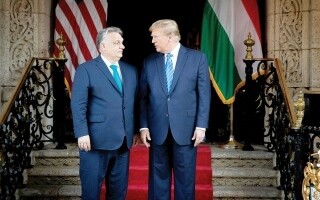
The ancient Greek storyteller Aesop said: 'Be careful what you wish for, lest it come true.' And any American who gets excited, alongside the administration of U.S. President Donald Trump, and calls for the dismantling of the European Union, on the grounds that it is guilty of 'erasing civilization,' should take this fable seriously. Regardless of the glaring contradiction between the alleged 'reverence' for the 'Make America Great Again' movement and national sovereignty, and the arrogant way the administration dispenses advice to Europeans on how to organize their continent or who to vote for, the hostility toward the European Union, which is clearly visible in Washington, suffers from a deeper problem. In other words, Europe without the European Union would not be a thriving continent of sovereign nation-states at all. In fact, if it abandons the European project, the continent will resemble the countries of the Western Balkans after the breakup of former Yugoslavia—a place where all old grievances would suddenly reappear. This would be especially true if the expected breakup of the European Union were to be carried out by its supposed NATO allies, namely the so-called 'nationalist' forces in European politics. Ultimately, the long-term political project of Hungarian Prime Minister Viktor Orbán, backed by Trump, revolves around reviving 'Greater Hungary,' as it was before the 1920 Treaty of Trianon, at the expense of his country's immediate neighbors, such as Romania, Ukraine, and Serbia. There is a chance that ultra-nationalists in neighboring regions have their own ideas. For example, Serbian President Aleksandar Vučić holds a great respect for former Serbian dictator Slobodan Milošević, who waged bloody wars to maintain Serbian dominance in the Balkans. Would he simply cede areas like Subotica or Szabadka (in Hungarian) to his power-sharing partner in Budapest? And what about the views of someone like the controversial Member of the European Parliament, Diana Șoșoacă, who seeks to annex lands 'historically Romanian,' such as northern Bukovina, from Ukraine? The main reason for the extreme secrecy around these and many other historical distortions is the achievement of the European project, including passport-free travel and a high level of minority rights. With the demise of the European Union, a chain of events previously considered impossible could unfold, from wars to 'frozen' conflicts like those maintained by Russia and Serbia in regions such as Transnistria and Kosovo. Undoubtedly, the major powers would have their say in such an event, such as Russia, which has already grown bolder, and which the Trump administration is encouraging in Ukraine, seeking to expose the 'hollowness' of NATO's Article 5. Or even Germany under a possible leadership from the far-right 'Alternative for Germany' party, which its Trump ally Elon Musk urged to overcome its historical sense of guilt. What else could go wrong? The suggestion that the European Union is the be-all and end-all of European civilization reveals a profound ignorance of the continent's history. Since the fall of the Roman Empire, Europe has sought to strike a balance between unity and cultural, political diversity, and its successive quasi-federal institutions are part of that balance. Far from being an aberration, the European Union continues the legacy of the Holy Roman Empire, the Hanseatic League (which included many trading cities in the North and Baltic seas), and the Polish-Lithuanian Commonwealth. Of course, some might argue that what happens in Europe should be a European matter, not an American one, but that, at best, is an argument for withdrawal, including pulling the U.S. security umbrella from Europe, not for the current efforts by Musk and Washington to interfere in European politics. Moreover, the arguments for U.S. withdrawal are weak and ahistorical. In 1917 and 1941, Americans learned a harsh lesson: they may not be interested in a European war, but a European war may be interested in them. In the first case, the threat to American interests came from German naval attacks on American ships bound to and from Britain. In the second case, Germany declared war directly after its ally Japan attacked 'Pearl Harbor' in America. America's post-war policy toward Europe included strong support for the project of regional economic integration, which was not the product of 'stupid or naive' past U.S. leaders, but was driven by efforts to prevent another European war. This policy was a stunning success that coincided not only with an unprecedented period of peace and economic prosperity in Europe but also with the rise of America's role as an unchallenged global power, thanks to the relationship across the Atlantic. Under a national security strategy that is deeply hostile to Europe, what the Trump administration is doing against the European Union is no exception. And while it may seem like 'fun and games' now, if the European Union is brought down by Russia and a Trump-led United States, let Americans be aware that they will soon regret it.