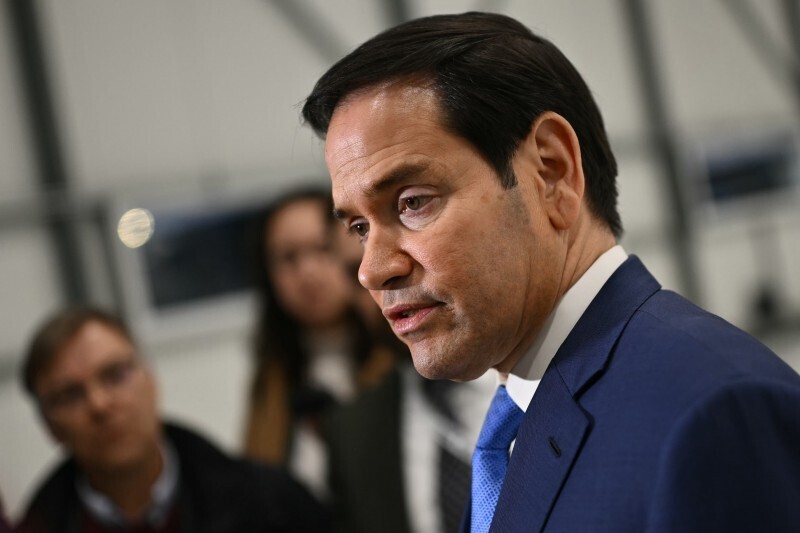
If the spectacular military maneuver is followed by a government linked to Chavismo, Marco Rubio will face a resounding defeat. Trump announced that the United States captured Maduro and removed him from Venezuela. His race against time is to prevent what happened in Venezuela from being simply the capture of a supposed organized crime boss. For Rubio, the arrest of the autocrat is not the end of anything, but the beginning of an internal power struggle between Washington and Mar-a-Lago, with a clear fork: the continuation of Chavismo in Venezuela or a move towards a change of government. All eyes are now on Vice President Delcy Rodríguez, who, as both foreign ministries stated, is in communication with the governments of China and Russia. He did not go into further details, focusing on the fact that there were no U.S. military casualties and stating that no ally of Maduro will remain in power, though he mentioned a bit confusingly that Vice President Delcy Rodríguez remains in her post. The message is understandable because Trump's political base opposes new armed conflicts as well as long military incursions outside the United States. In recent days, the Miami Herald had revealed that Maduro had offered Trump to leave Rodríguez in power and that she would call new elections. In parallel, and as has been happening, the U.S. president does not mention the Venezuelan opposition in his narrative, which, by the way, is maintaining absolute silence at this time. In the interview with Fox, Trump did not want to delve into the role of opposition leader Corina Machado and the possibility that her ally, former presidential candidate Edmundo González, would assume the presidency. The question floating in the diplomatic sphere: Is a democratic transition feasible without the continued military presence of the United States in Venezuela? A high-voltage military operation, with attacks on Caracas and great operational precision, has pushed the former Florida senator into a ring that will define his political future, specifically in his intention to succeed Donald Trump in the White House. For Rubio, the arrest of the autocrat is not the end of anything, but the beginning of an internal power struggle between Washington and Mar-a-Lago, with a clear fork: the continuation of Chavismo in Venezuela or a move towards a change of government. The Secretary of State needs to politically eradicate Chavism and defeat those Trump loyalists who only seek a change of names that would generate an alignment with Washington. In recent days, the Miami Herald had revealed that Maduro had offered Trump to leave Rodríguez in power and that she would call new elections. Trump confirmed this dialogue and said he rejected it: 'I told him no, that we were going straight,' he told Fox News. The Rodríguez family is key; Delcy and her brother Jorge, head of the Venezuelan National Assembly, are the interlocutors for the White House's special envoy, Richard Grenell, who also looks after Chevron's interests in Venezuela. Venezuela's Vice President, Delcy Rodríguez. In the interview with Fox News, Trump said that this weekend a decision would be made on Venezuela's political future. Vance backed the capture of Maduro and criticized Democrats who were questioning the military maneuvers in the Caribbean. Secretary of State Marco Rubio is in a decisive moment following the capture of Nicolás Maduro. That answer holds much of the scenario for the coming days. Good news for Rubio came from the office of Vice President JD Vance, the intellectual author of the diplomatic isolationism of the White House embodied in the last national security document.