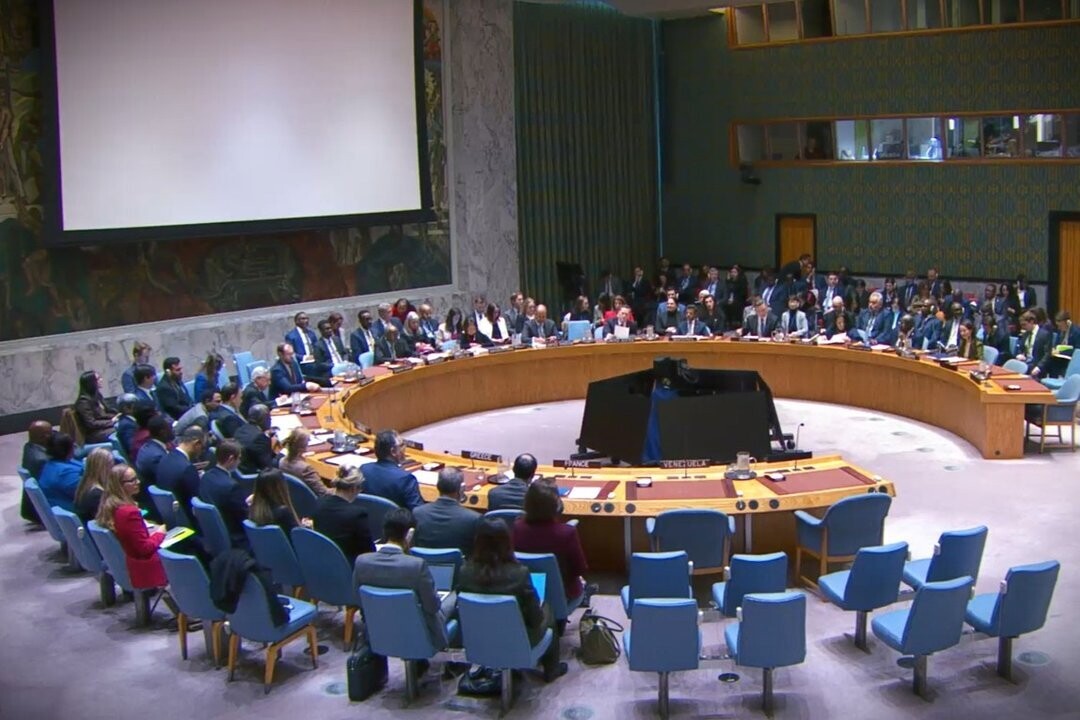
New York, January 5 -- The UN Security Council became the stage for a tense diplomatic exchange on Monday following the capture of Nicolás Maduro. Colombia denounced the arrest of the president as a "violation of international law." According to the Argentine News Agency, the US ambassador to the UN, Mike Waltz, was categorical in defending the White House's position: "There is no war against Venezuela or its people." The United States denied being at war with Venezuela and dismissed the idea that the temporary administration of the country constitutes an occupation. "We are not occupying any country."
Guterres's Warning and Colombia's Claim Colombia's representative, Leonor Zalabata, alerted the body that the American action transgresses the UN Charter. In line with this, UN Secretary-General António Guterres, through his deputy Rosemary A. DiCarlo, expressed his "deep concern" over the military action.
Territorial Integrity Guterres recalled that international law "prohibits the use of force against the territorial integrity of States."
Affected Areas The UN confirmed that the operation impacted Caracas and the states of Miranda, Aragua, and La Guaira, although an exact number of victims has not yet been reported.
Call for Dialogue The organization urged finding a non-violent solution and called on Venezuelan actors to engage in an "inclusive dialogue" that respects the rule of law.
What does the UN Charter say about the use of military force between countries? Article 2(4) of the UN Charter prohibits member states from resorting to the threat or use of force against the territorial integrity or political independence of any state. The only permitted exceptions are legitimate self-defense (Article 51) or actions expressly authorized by the Security Council to maintain or restore international peace and security.