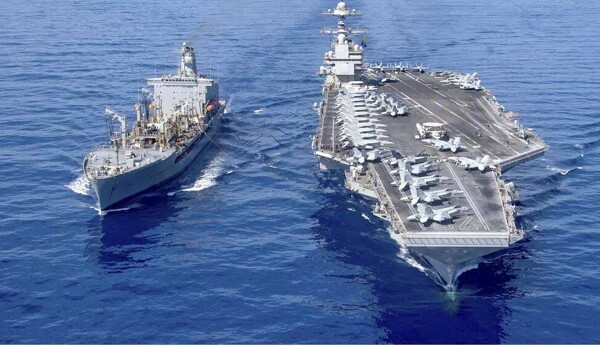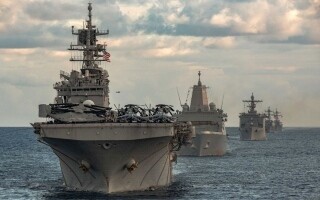
The United States has established the National Commission on the Future of the Navy to address critical challenges facing the U.S. Navy. The commission will conduct a wide-ranging study to understand how various electoral districts define the problem and identify opportunities for change. It will also seek direct input from professional military education institutions and joint-service personnel to ensure sailors and Marines have a voice in shaping the forces they will serve in. The commission will evaluate the performance of different fleet structures, including a mix of manned ships, aircraft, and unmanned systems, while also examining whether the U.S. industrial base can rebuild and maintain the fleet. These problems have worsened in the decades since, reaching a critical point as the U.S. Army sought to focus on countering China's military rise. Authors of a report from the Center for Strategic and International Studies stated, "Despite the Navy's plans to expand the fleet and bipartisan funding efforts from Congress, the Navy, (Pentagon), Congress, and the defense industry have continuously failed to produce ships in the required quantity, speed, and cost." America needs a Navy capable of securing sea lanes and protecting its trade against adversaries who have become powerful and bold. For Washington, which relies on open seas, stable markets, and reliable deterrence, the mission is clear. The United States needs a Navy capable of securing sea lanes and protecting its trade from adversaries who have acquired the strength and audacity to challenge it. Challenges and Problems The U.S. Navy faces several challenges in its effort to expand its fleet. This demand places pressure on forces and exacerbates problems in shipbuilding and maintenance. Opportunities for Change Responsibility for this crisis extends beyond the U.S. Department of Defense (Pentagon). Outdated policies and laws have created perverse incentives across the defense industrial base and federal bureaucracy. Therefore, the commission will provide recommendations not only to the Navy but also to Congress, the White House, and the defense industry. The United States cannot cede the open seas to China, even as there are voices in both parties (Republican and Democratic) calling to shift focus from external problems to domestic challenges. To develop practical options, the commission will set an ambitious agenda for research and awareness. For the first time since World War II, the United States faces a naval competitor capable of challenging American control of the seas and global trade. China has spent a generation building a fleet capable of competing for maritime dominance, converting industrial momentum into military power. Beijing's rapid naval expansion, coupled with its dominance in commercial shipbuilding, is shifting the balance of power at sea and undermining U.S. advantages. Meanwhile, regional powers create a sustained global demand for naval forces. The Navy is being asked to do more with less, to patrol a wider area than ever before with a smaller, older, and more fragile fleet. Problems with readiness and a backlog of maintenance now threaten America's ability to respond to crises. This moment requires a fundamental rethinking of American naval strategy, the fleets that support it, and the industrial base that sustains its military power. For this reason, Congress created the National Commission on the Future of the Navy. Strategic Options This process will yield a practical outcome, including strategic options and recommendations regarding force structure, as well as reforms related to how the U.S. designs, builds, and operates its fleet. The commission will share the options and recommendations with the Navy, Congress, and the White House, and then issue a final report that can serve as a guide for lawmakers and experts in hearings and broader public discussions about the nation's role on the high seas. In this context, English explorer and writer Walter Raleigh once wrote: "He that commandeth the sea is at great liberty, and may take as much and as little of the war as he will... Whosoever commands the sea commands the trade; whosoever commands the trade of the world commands the riches of the world, and consequently the world itself."