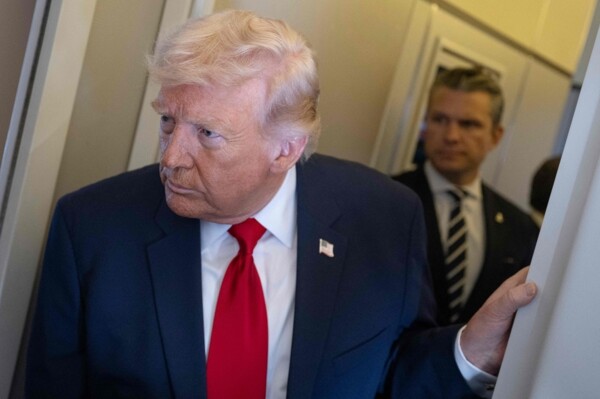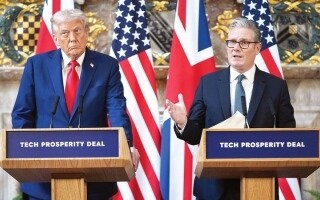
In response, Trump threatened to cut all trade relations, saying he no longer wants 'any relationship with Spain'. Starmer is right to maintain distance from a military operation that lacks legal justification and coherent objectives. In Washington, the president's authority to impose unjustified tariffs has been restricted, while other areas of trade between the UK and the US exist, such as the 'Technology Prosperity Agreement' worth billions of pounds currently under negotiation, which could lead to swift economic consequences if diplomatic tensions arise. Then there is the problem of military dependence. There is truth to US President Donald Trump's statement earlier this week that the relationship between the UK and the US 'is no longer what it was', although there is no indication he understands the reasons for this change. The US president is 'very upset' that UK Prime Minister Keir Starmer was 'uncooperative' in the war against Iran, having provided only limited logistical support to American forces. The Prime Minister's statement that the resources of the Royal Air Force could be involved in defensive operations does not compensate for the previous refusal to place British military assets at the disposal of the United States. Earlier this week, French President Emmanuel Macron proposed, for the first time, to expand his country's nuclear deterrence to include other European nations. While the military disparity between the US Army and the forces of any other NATO member remains the dominant material consideration in European security, diplomatic and political calculations are changing rapidly. Disagreements over Iran will complicate relations between Washington and Brussels, but Trump will not cut economic ties with the EU over a disagreement with Sánchez. After leaving the European Union, the UK has become more vulnerable to unilateral retaliatory measures. However, wise caution will not protect the UK from fallout if Trump's anger turns into a long-term dispute. There are significant differences between the Spanish and British situations. Spanish Prime Minister Pedro Sánchez has been open in his opposition to the war against Iran. Disagreements over Iran will complicate relations between Washington and Brussels, but Trump will not cut economic ties with the EU over a disagreement with Sánchez. As a member of the EU, Spain trades with the US as part of the single market between the 'Union' and America. In this context, the UK's break from the European project looks increasingly like a miscalculation and a growing danger. Meanwhile, Starmer is seeking closer European cooperation on defence and security, but negotiations are slow. All European NATO members have relied on US power to ensure their security, but for the UK, the 'special relationship' between London and Washington had evolved into comprehensive entanglement across all areas. French President Emmanuel Macron was an early advocate of 'strategic independence' from Washington, before most European leaders anticipated a transatlantic crisis of the current scale. Spanish Prime Minister Pedro Sánchez has been open in his opposition to the war against Iran. The UK's national defence infrastructure is inextricably linked to the 'Pentagon' in ways that cannot be ignored. The contrast with France, which has developed its security and defence capabilities from French distrust of America, is notable. Trump's volatile mood and erratic actions provide a compelling argument for faster action. The legacy of Brexit complicates relations with Europe but does not change the strategic necessity of cooperating with European allies. From The Guardian. The Prime Minister's statement came late for Trump, whose anger turned into a cultural mockery of 'windmills' ruining the British landscape and a false claim about the spread of 'sharia courts' in the UK. Starmer is not the only European leader 'guilty' of offending Washington.