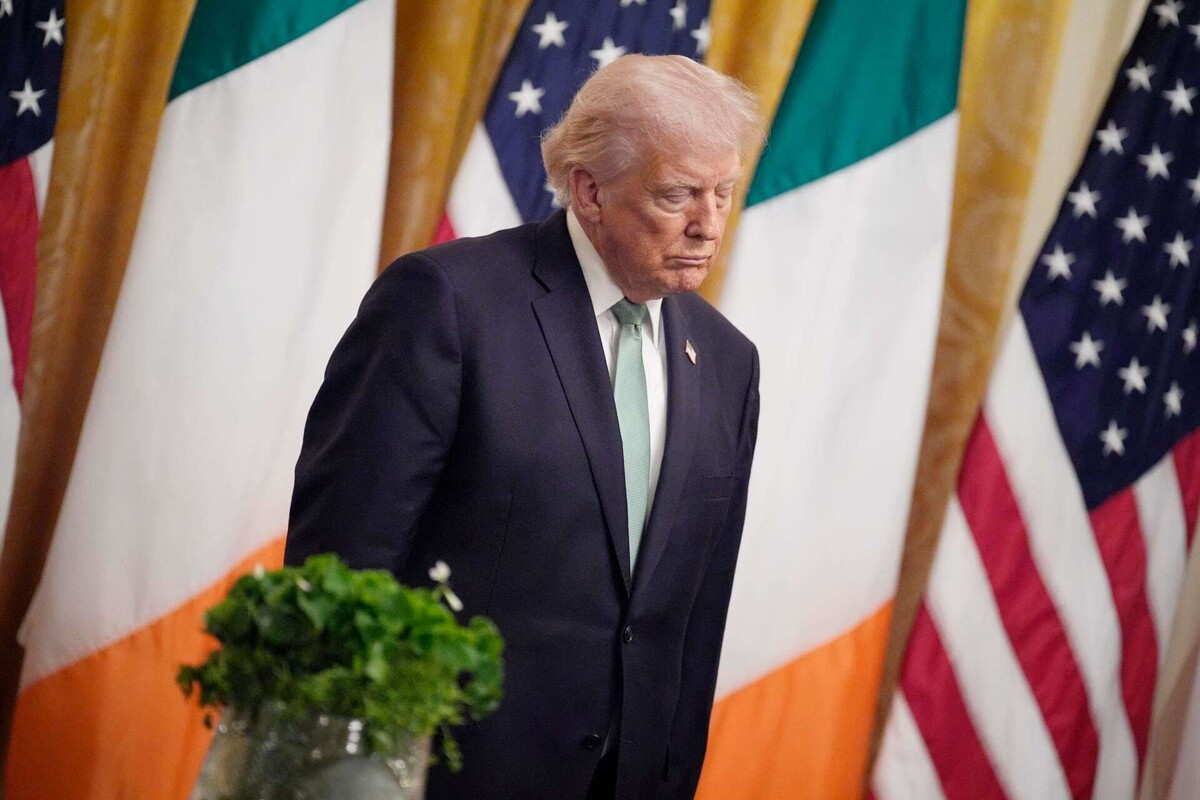
The U.S. military claimed to have neutralized Iran's ability to attack vessels transiting the Strait of Hormuz, as President Donald Trump mulled the idea of 'reducing' military efforts in the Persian Gulf. Trump's statements came shortly after he dismissed a ceasefire and left open the possibility of deploying ground troops, highlighting the president's constant contradiction regarding his objectives and plans for the war between the United States, Israel, and Iran. The conflict, now in its fourth week, has driven up energy prices, leading the U.S. Treasury to take the extraordinary step of authorizing the sale of Iranian oil and petrochemical products already loaded onto tankers. 'We are very close to achieving our goals as we consider the possibility of drastically reducing our major military efforts in the Middle East,' Trump said in a social media post on Friday. However, Israeli Defense Minister Israel Katz stated on Saturday that the joint campaign would be significantly intensified, a day after Tehran launched ballistic missiles against the U.S.-British military base on Diego Garcia, nearly 4,000 kilometers from Iran. According to a source familiar with the matter who spoke on condition of anonymity, the base was not damaged, but the attack demonstrated a capability beyond what was known to be possessed by Iran. Meanwhile, U.S. Central Command (CENTCOM) announced that it bombed Iranian facilities this week that threatened commercial maritime traffic in the Strait of Hormuz, a strategic chokepoint through which about one-fifth of the world's oil and liquefied natural gas passes. CENTCOM Commander Admiral Brad Cooper stated in a video posted on X that the U.S. attacked Iran's underground facilities, anti-ship missiles, as well as intelligence and radar systems. The International Atomic Energy Agency (IAEA) stated on Saturday that Tehran had informed it of an attack on the Natanz nuclear plant. In a statement posted on X, the IAEA indicated that no increases in radiation levels were recorded outside the plant, which is one of Iran's main uranium enrichment facilities and was bombed during the 12-day war between Israel and Iran last June, as well as being attacked during the first week of the current conflict. What other countries have been affected by the war in Iran? The conflict also continued to affect neighboring countries in the Gulf, including the United Arab Emirates, which reported on X that Iran had fired eight drones and three missiles at the country. It is unclear how Iran would respond to a unilateral U.S. decision to halt attacks following recent attacks on the country's energy infrastructure, in which several high-ranking officials, including security chief Ali Larijani, were killed. Despite weeks of U.S. and Israeli bombardments, the regime is far from falling and is instead consolidating around the most hardline remaining sectors, according to Western intelligence assessments and sources familiar with the matter. Iranian authorities have been reluctant even to discuss the reopening of the Strait of Hormuz amid the intense U.S. and Israeli bombing campaign, which continued overnight. The Israeli military announced on Saturday morning that it was attacking targets in Tehran after detecting missiles launched from Iran, which also continued to launch retaliatory attacks against its Arab neighbors in the Gulf. Trump has been pressuring his allies to help the U.S. militarily secure the strait, but on Friday he indicated he would leave that effort to other nations. 'The Strait of Hormuz will have to be guarded and watched, as necessary, by the other nations that use it; the United States will not do it!' Trump declared. 'If asked, we will help these countries in their efforts to keep the Strait of Hormuz secure, but it should not be necessary once the threat from Iran is eradicated. Most importantly, it will be a simple military operation for them.'