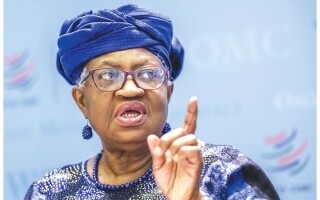
An expert added: «I would not be surprised if the U.S. Trade Representative's office received an order to begin the process of withdrawing the United States from the World Trade Organization». Upon returning to the White House, many trade diplomats considered a full U.S. withdrawal from the organization a realistic possibility. Meanwhile, Maria Pagan, who served as the U.S. Ambassador to the World Trade Organization under former President Joe Biden, said: «I can imagine it will be difficult for other countries to participate because they are very upset with the United States, but I hope they can put some of that aside». «Who knows, the situation could get worse?»
However, Washington has taken a series of quieter steps indicating that it still sees strategic value in this organization. The U.S. argues that it should be able to treat some countries differently, especially when it comes to competitors like China. A high-ranking U.S. official, who requested anonymity due to the sensitivity of the discussions, said: «The United States has been a leader in the WTO from the beginning, and we are determined to continue participating in and leading the reform process within the organization». He added: «At the same time, we are looking at things realistically. We are realistic about what the WTO can and cannot do, where the organization has fallen short in the past, and what we believe needs to be done».
Nevertheless, there are many reasons why the rest of the world is ignoring these statements. The Trump administration withheld U.S. membership payments, blocked the work of the WTO's Appellate Body by preventing appointments, and repeatedly ignored international trade rules with its tariff policies. During his first term, Trump tried to prevent the appointment of WTO Director-General Ngozi Okonjo-Iweala.
Yet, even as Washington publicly ignores these rules, the White House administration is sending subtle signals of a return to engagement with the very institution that set those rules. Trump's trade team will discover how the world will receive this message during the four-day meeting of trade ministers in Yaounde, Cameroon, this week.
U.S. President Donald Trump ripped apart the tariff system set by international trade rules. She continued: «I think we are at our worst moment, though I hate to say that. The goal of the meeting, which began on March 26 and ends today, March 29, is to find a way to reform the stalled trade body and restore its importance». WTO Ambassador Peter Olberg of Norway, who is mediating the reform discussions, said: «It's different this time», explaining: «Everyone realizes that whether we are talking about U.S. tariffs, bilateral agreements, the situation in the Middle East, or the war in Ukraine, we are in a completely different phase than before».
The meeting was overshadowed by an atmosphere of unusual tension. The other 165 WTO member countries are waiting for the next step from the U.S. President after the Supreme Court last month overturned most of his original tariff agenda. Before this sudden change, the Americans were already trying to reshape the way the WTO, founded three decades ago, works and steer its rules in their favor. The first sign of this came in December 2025, when the U.S. submitted a «reform paper» at the WTO headquarters in Geneva. In that paper, Washington did not just make some minor adjustments but sought to reconsider a fundamental principle of the WTO, known as «Most-Favored-Nation», which requires countries to treat each other equally in trade. This idea, which was previously controversial, is gaining momentum, as the European Union has shown a willingness to treat some countries differently, especially those that benefited from trade liberalization without opening their markets.