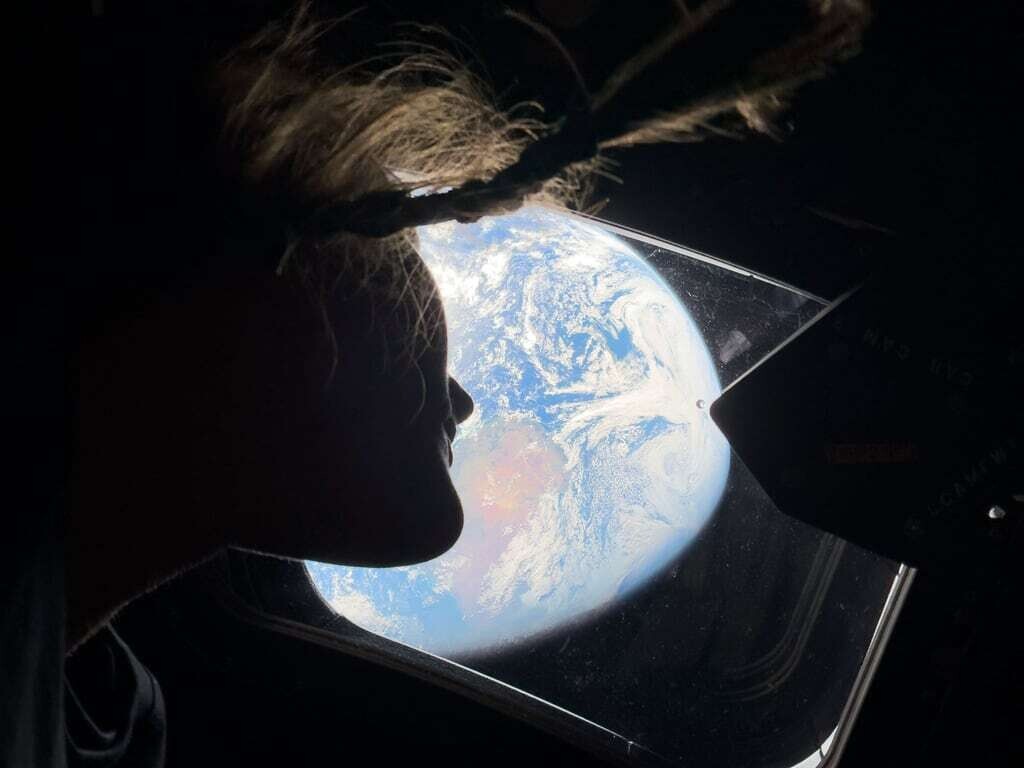
In addition to a wake-up song this morning, the Artemis II astronauts were treated to an audio message from Apollo 16 astronaut Charlie Duke. As part of the Athena project, specialists highlight Josefina Perez and Juan Pablo Cuesta from CONAE; Sonia Botta and Ramon Lopez La Valle from UNLP; Nicolas Balbi from VENG; Fernando Fillippetti and Franco Spadachini from FIUBA; Laura Gonzalez and Hernan Socolovsky from CNEA; and Leandro Gagliardi and Federico Golmar from UNSAM. Their work covers avionics, structure, GPS, integration, testing, dosimeters, battery chargers, solar panels, and experimental electronics. What do Mexico, Brazil, or Colombia contribute? Officially, several Latin American countries are part of the Artemis ecosystem through cooperation agreements. Mexico joined the program in 2021, Brazil formalized its participation in 2020, and Colombia joined in 2022; however, their participation is part of working groups rather than individual contributions. In the Artemis II mission, almost all attention is focused on the four astronauts gathering information about the Moon after the April 1 launch, but behind that historic photo are other key pieces, some from the Hispanic community. The world's eyes are on the first crewed flight of the Artemis program and the first mission with humans aboard the SLS-Orion system. Its objective is to orbit the Moon and return to Earth on a journey of approximately 10 days, which has a transcendent moment this Monday with the lunar flyby, but the reality is that this story is not written only from the cockpit, but also from control centers, launch rooms, recovery teams, and technological developments that include confirmed Latin American participation. Key Hispanics in the Artemis II mission Liliana Villarreal will help bring the crew back. One of the most important names is Liliana Villarreal, born in Cartagena, Colombia, who is the Director of Landing and Recovery for Artemis II at the Kennedy Space Center. NASA itself highlights that Villarreal is responsible for leading nominal and contingency recovery efforts for the astronauts and Orion's hardware in crewed missions. This means that if Artemis II successfully completes its return, a decisive part of that operation will depend on the team Villarreal leads. Mike Guzman, the engineer at the heart of the launch. Another key face is Mike Guzman, Principal Propulsion Systems Engineer for Artemis II. NASA recently presented him in its “I Am Artemis” series and explained that he works on the rocket's main propulsion system, as well as participating from Firing Room 1 at the Kennedy Launch Control Center. His role places him right at the heart of the operations that launched the mission and will continue to be critical for the lunar program in the coming years. Diana Trujillo is on the team that supports Artemis from Earth. In the program's broader ecosystem, Diana Trujillo also stands out, an aerospace engineer born in Cali, Colombia. NASA identifies her as part of the cohort of flight directors selected to supervise operations of the International Space Station, commercial crew, and the Artemis program itself. Although her name is not directly mentioned in the Artemis II operation, she is part of the technical body that supports NASA's new era of human exploration. Athena, the great Latin American participation. However, the most visible Latin American contribution to Artemis II comes from Argentina, as the Argentine government and CONAE reported that the Athena microsatellite, a 12U CubeSat, is flying as secondary cargo on the mission. Argentine authorities emphasize that this development made the country the most visible Latin American case within the flight by integrating its own technology into NASA's crewed lunar campaign. Athena will test long-range S-band communications, radiation measurement in deep space, GPS data acquisition above the GNSS constellation, and technological demonstrations with value for future cislunar missions; that is, it is not a symbolic presence, but Latin American technology operating in the lunar environment. “Thanks to you and to the whole team on the ground for building on our Apollo legacy with Artemis.”