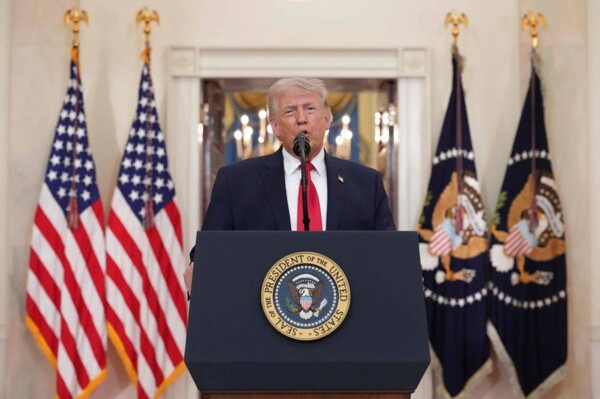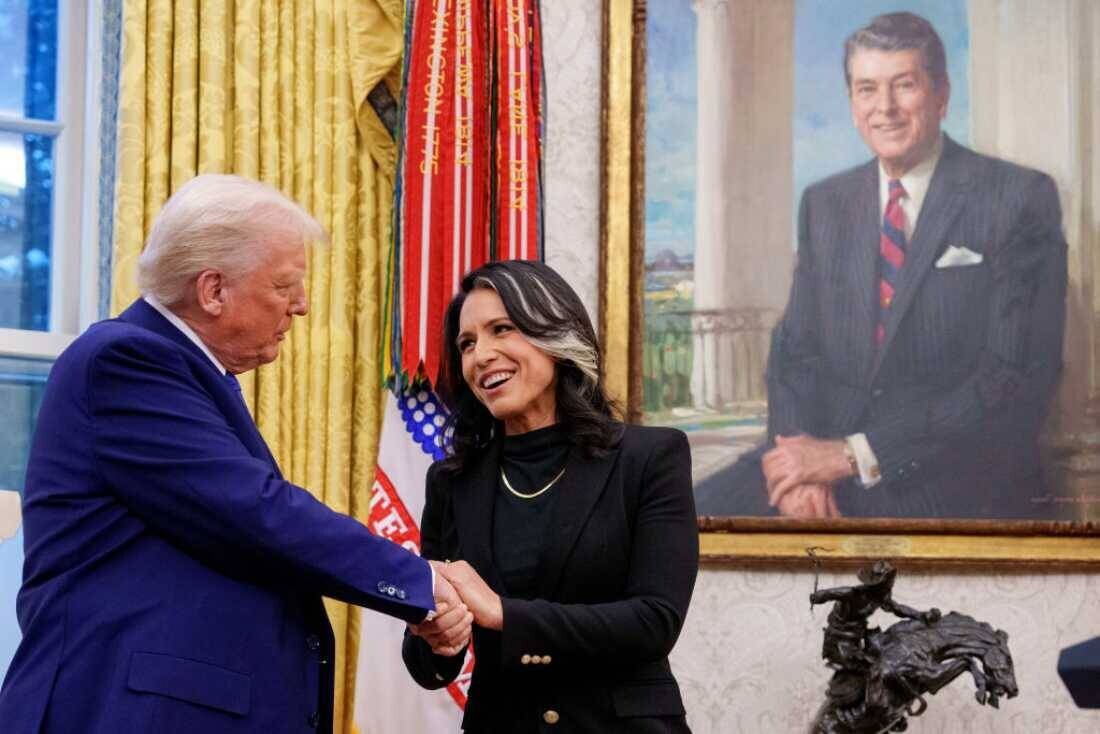
US President Donald Trump was on the verge of firing National Intelligence Director Tulsi Gabbard over her "unenthusiastic" stance on a war with Iran, but he backed down after intervention from his former advisor Roger Stone, according to the Axios website. The site added that Trump was annoyed with Gabbard after she failed to show "full support" for a war with Iran during her recent testimony before Congress on the threats facing the United States, according to five advisors and confidants who spoke to the US president. The day before, Joe Kent, Gabbard's former advisor and counterterrorism director, resigned in a notable move that made headlines and weakened the administration's media message about the danger posed by Iran. Two sources said that Trump "berated" Gabbard in a private meeting shortly after that, questioning her loyalty. US President Donald Trump backed down from firing National Intelligence Director Tulsi Gabbard after the intervention of one of his closest allies and advisors, Roger Stone, who played a crucial role in calming the situation and redirecting the president's decision following internal tensions sparked by her recent stances before Congress, especially regarding the Iranian file, according to the Axios website. The site reported on Friday that Trump expressed clear annoyance with Gabbard over her lack of full support for Trump's policy toward Iran during her recent testimony, which was seen within his inner circles as an indication of diverging views within the national security team, and tensions increased after the resignation of Joe Kent, one of Gabbard's former advisors, which opened the door to discussion about her performance and role within the administration. Sources spoke of a private meeting where Trump directed direct criticism at Gabbard, and some attendees described the situation as a "sharp rebuke," while others saw the discussion as closer to the style of political sarcasm than direct anger. As the debate escalated, the president began polling his advisors about her future in the role. Key intervention Roger Stone intervened in the crisis, contacting Trump and presenting him with a package of political arguments that focused on the idea that firing Gabbard could create an unnecessary media crisis and could turn her into a political symbol within the anti-war camp. He also warned that this step could be interpreted as a contradiction within Trump's administration on foreign policy. Stone also emphasized that Gabbard enjoys the reputation of a "disciplined official" in Congress, and that firing her could weaken the administration's position rather than strengthen it, in addition to the possibility that it could affect the balance of future Republican primaries. Prominent Trump activist Laura Lumer intervened in the debate, criticizing Gabbard and arguing that she does not align with the strict political line within the administration, especially on Middle East and Israel issues, which further complicated the internal political landscape. The discussion in the White House ended with the decision to keep Gabbard in her post, with indications that Stone's intervention was a decisive factor in the decision. Sources within the administration confirmed that Trump still considers her an important part of his national security team and prefers to resolve disagreements internally rather than making immediate firing decisions. The White House spokesperson stated that Gabbard "continues to perform her duties efficiently within the president's team," while the Office of the Director of National Intelligence emphasized her full commitment to her duties in protecting national security. However, a Gabbard ally told Axios that this is "not true at all," pointing out that Trump defended her repeatedly. The dividing line in this crisis lies in the Israel file. Two other sources said that Trump was not angry to that extent, but directed comments at her in a sarcastic yet friendly tone. Testimony saves Gabbard A week later, as reported by The Guardian, Trump began polling his advisors about Gabbard's testimony, her job performance, and the possibility of replacing her, but her colleagues in the government supported her, as did his former advisor Roger Stone when he contacted the president last week, according to Axios. A source familiar with Trump's thinking style told the site: "Roger settled the matter." Stone declined to comment but confirmed on X on Thursday that he intervened to support Gabbard, saying: "Fortunately, I acted in time." On Sunday, Trump acknowledged disagreements with National Intelligence Director Tulsi Gabbard on how to deal with Iran, considering her "more moderate." Stone, 73, has a special relationship with Trump that dates back to 1979, and no one can match it. According to two individuals who spoke with Stone, he presented four reasons to convince Trump to keep Gabbard: she was loyal, she testified before Congress professionally, she did not contradict the president, and she had no intention of resigning like Joe Kent, and did not deserve to be preemptively fired. Sources said that Stone told Trump that firing Gabbard would create a negative news cycle that would harm the president unnecessarily, and could turn her into a "martyr" in the eyes of some of his war-weary supporters, and if she were fired and gained this halo of credibility among war opponents within the "MAGA" camp, she could become a strong Republican presidential candidate a little more than a year later, which could harm Trump's preferred candidate for his successor, Vice President JD Vance, in early 2028 primaries such as New Hampshire and South Carolina. Internal disagreements Axios reported that Roger Stone's defense of Gabbard sparked a bitter dispute with another Trump advisor, Laura Lumer, who is one of Gabbard's prominent critics and accuses her of disloyalty. Lumer wrote on X last week: "Tulsi is done." Lumer and other Gabbard critics criticized her decision to appoint Joe Kent, who was accused of antisemitism when he resigned, accusing Israel of manipulating Trump to push him into a war with Iran. The US Director of National Intelligence refused to disclose whether Iran's nuclear program represented an imminent threat and avoided answering whether intelligence supported the justification for starting a war with Iran. Gabbard recently appointed Dan Caldwell, a critic of US policy toward Israel, to the Office of the Director of National Intelligence, which also drew criticism from Trump supporters who back Israel. Gabbard, a former Democrat and veteran, has long been known for her criticism of foreign wars and US policy in the Middle East. Before Trump joined the campaign to bomb Iran last year, he was annoyed that she posted a video on her X account talking about her visit to Hiroshima, warning that "the political elite and war hawks are recklessly fueling fear and tensions between nuclear powers." The White House does not want any drama, so it gave her the option to resign, but it would cause significant harm if she is left with that option, because she will launch her 2028 presidential campaign." "Tulsi saved".