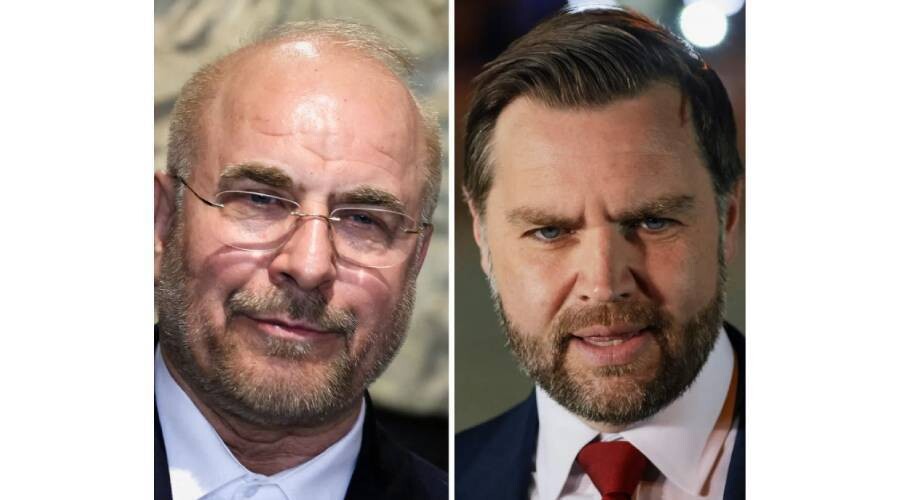
When J.D. Vance arrives in Islamabad on Saturday for talks with Iranian officials, his presence will fulfill a desire among remaining leaders in Tehran, sources said, who have quietly sought for the U.S. vice president to play a leading role in negotiations aimed at ending the war. Observers also feel optimistic about the success of the talks, citing the pragmatism of the head of the Iranian delegation, Bagher Ghalibaf. A regional official and four people familiar with the matter said Iran views Vance as one of the most anti-war figures in President Donald Trump's inner circle. That reputation, a long-standing feature of his political rhetoric, has led Tehran to believe Vance might be more inclined to seek a deal in good faith than other representatives Trump sends. There is no indication that Vance will adopt a more flexible negotiating stance than any other representative Trump sends, who threatens to resume U.S. airstrikes if talks fail. A White House official said the decision to send Vance to Pakistan for talks was Trump's alone and that the president will make the final decision on what deal can be accepted. But the vice president's presence, and whether Tehran's impressions of him are accurate, will be a factor in the chances of success or failure of direct talks since the war broke out on Feb. 28.
Risks and Gains The talks carry high stakes for Iran, the Trump administration, and for Vance if the talks succeed, Vance will politically benefit as he is a top candidate for the Republican presidential nomination in 2028. Trump also appears in recent talks with advisors to acknowledge that the Strait of Hormuz, a pivotal point for global trade, remains effectively closed despite a fragile ceasefire and is unlikely to be fully reopened soon. In a social media post on Thursday, Trump said oil would flow again quickly without providing further details, raising questions about the large discrepancy between the two sides and whether Vance has been given a real chance or a poisoned chalice. Senior White House officials have worked to portray Vance as a key player in the Iran talks. White House spokesperson Caroline Levitt said at a press conference on Wednesday that "Vice President Vance has played a very important and leading role in this from the very beginning... he has been involved in all discussions." Vance himself was more cautious. On Wednesday during a visit to Hungary, he said, "My role has largely been to take long phone calls... I've been taking a lot of phone calls, making a lot of phone calls." But analysts say he also faces the risk of his name being tied to a foreign quagmire that has killed thousands of civilians and driven up fuel prices and inflation if the talks drag on or fail completely. Historian and Carnegie senior fellow Stephen Wertheim said, "If the peace negotiations go well and the outcome is acceptable to the public, it could help improve Vance's image, but I think there's also a risk to Vance of becoming the face of the war." Vance will be joined by Trump's son-in-law, Jared Kushner, and U.S. Special Envoy Steve Witkoff. When asked if Iran had specifically requested him to join the talks, Vance said, "I don't know, I'd be surprised if that were true."
New Negotiators and Reasons for Optimism With the same challenges, a senior regional diplomat said that among those who called for Vance to take a leading role was Iranian Parliament Speaker Mohammad Bagher Ghalibaf, who will represent Iran in Islamabad along with Foreign Minister Abbas Araghchi. Two sources familiar with administration discussions said some White House officials in recent weeks have cited Ghalibaf as their preferred interlocutor because they feel the former Tehran mayor has pragmatic qualities that might make him ready to reach a deal. The regional diplomat said that from Tehran's perspective, Vance carries more political weight as an elected high-ranking official compared to Witkoff and Kushner.