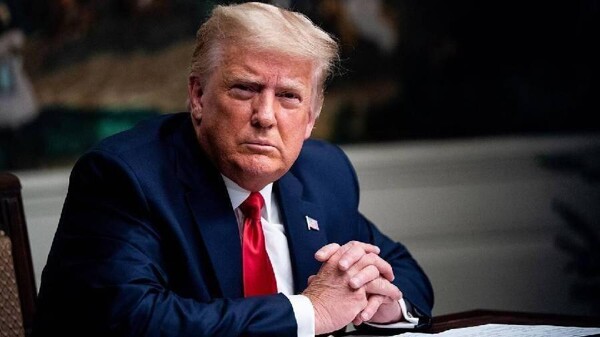
President Donald Trump announced on Saturday the official start of peace talks between the United States and Iran, threatening that the United States is ready to act again if negotiations do not go well. Trump stated in media interviews that the talks will show whether Iran is negotiating in good faith. The coming hours could be decisive, as they could determine whether the talks lead to a comprehensive agreement or a resumption of escalation in the Iranian-Israeli war. On Saturday, direct talks between the United States and Iran began in Islamabad with Pakistani mediation in an atmosphere charged with caution and mistrust, amid ongoing disagreements over the key issues at stake. Iranian President Masoud Pezeshkian stated that the high-level Iranian delegation participating in the talks with the US in Pakistan is "present to defend Iran's interests." Pezeshkian added on the X platform that the delegation "will negotiate courageously within this framework."
Iranian Foreign Minister Abbas Araghchi confirmed that the Iranian side presented its demands within the ten-point framework that Iran had previously announced. These developments reflect an attempt to avoid a return to military escalation should the diplomatic path fail. The White House also confirmed that a three-way face-to-face meeting was held between the United States, Iran, and Pakistan following Prime Minister Shehbaz Sharif's announcement of the talks' commencement after receiving both delegations separately. Despite differing assessments of the initial sessions by dozens of experts from both sides, the talks ran into a major snag by the end of the day over the Strait of Hormuz, which Tehran refuses to open, while possibilities emerged to extend the high-level talks for an additional day to determine the outcome of the round.
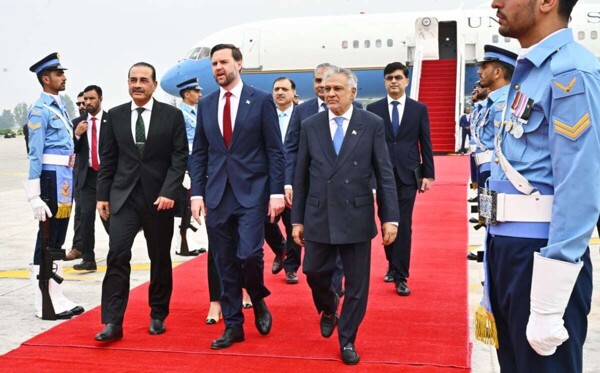
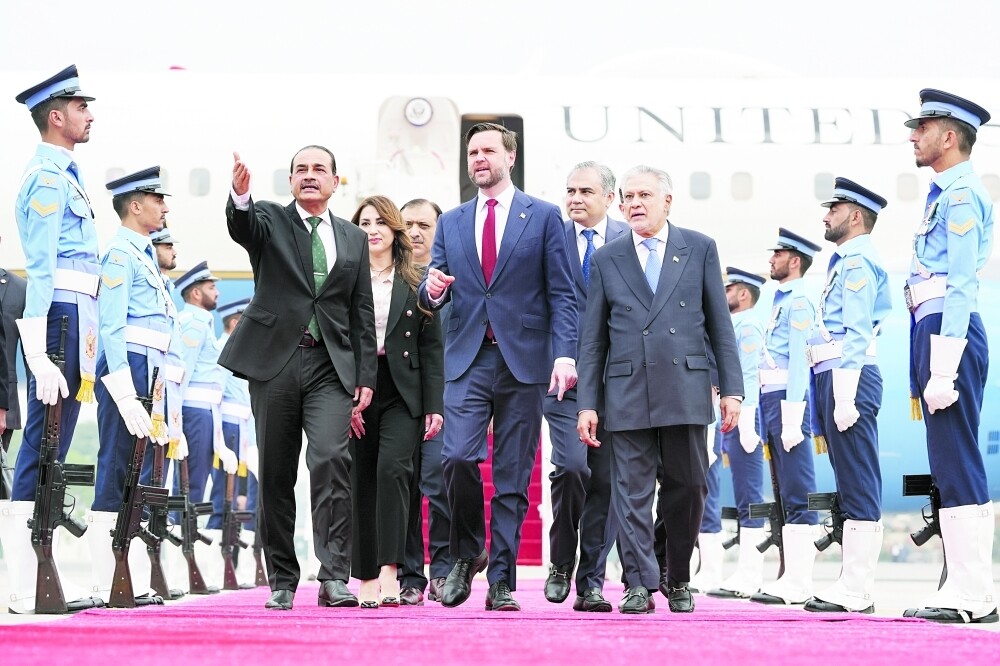
According to Reuters, the talks involved US Vice President JD Vance, along with US envoys Steve Witkoff and Jared Kushner, and Iranian Parliament Speaker Mohammad Bagher Ghalibaf and Foreign Minister Abbas Araghchi, as well as Pakistan's Chief of Army Staff General Asim Munir. Sharif praised both delegations for their "constructive dialogue," expressing hope that the talks would lead to "a permanent peace in the region." These are the first direct meetings outside of the negotiations Washington and Tehran held in the months before the war through intermediaries relaying messages between delegations sitting in separate rooms. Iranian state television reported that members of Iranian economic, military, and legal committees have joined the negotiation room in the Pakistani capital, Islamabad. CNN reported that sources stated the American and Iranian delegations were now engaged in "direct dialogue," a notable shift in the nature of negotiations that previously relied on mediation. Iran's Tasnim news agency reported that this phase was preceded by "intensive consultations and progress in the talks."
Iranian sources reported that "progress was made during the talks," particularly regarding limiting Israeli attacks on the southern suburbs of Beirut. A White House official stated that a full team of American experts in relevant fields is present in the Pakistani capital, with additional experts providing support from Washington. The British Financial Times, citing two of its sources, reported that negotiations between the United States and Iran over the opening of the Strait of Hormuz are in a stalemate and have reached a deadlock due to disagreements between the two sides. According to the newspaper, Iran insists on its control over the strait and its right to impose a tax on ship transit, and Iranian negotiators reject the idea of joint control over the strait. The strait, through which about 25% of global oil supplies pass, remains the main stumbling block in the negotiations between the two sides. Iran's Tasnim news agency reported, citing a source, that the "excessive demands" of the American delegation have hindered the technical teams' progress toward reaching a common framework for negotiations between the United States and Iran. The agency stated that the American side agreed to the release of frozen Iranian assets but at the same time emphasized that this issue "requires more precise technical and expert discussions" before it is finalized, while a White House official called talk of the release of frozen assets "fake news." Iranian Foreign Ministry Spokesman Ismail Baghi stated that the delegation conveyed Tehran's demands within the ten-point package that Iran had previously announced.